Cancer is one of the major health challenges worldwide. It is not a single disease but a broad group of diseases that can develop in different organs and tissues of the body. The World Health Organization (WHO) reports that cancer accounted for nearly 10 million deaths worldwide in 2024, making it a leading cause of death globally.
Understanding these fundamentals can help explain how different healthcare professionals, treatment approaches, and pharmaceutical products come together in modern cancer care.
What Is Oncology?
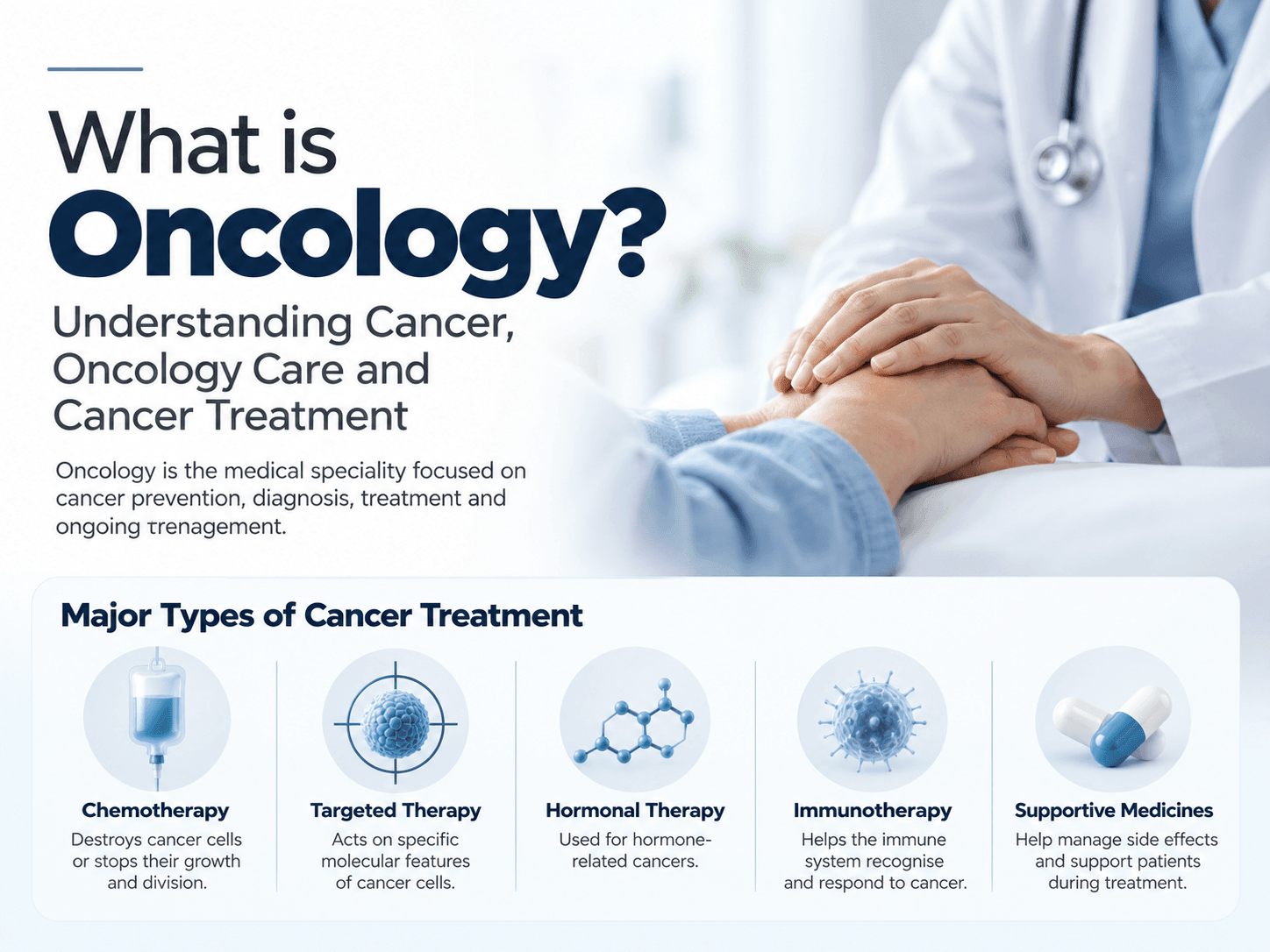
Oncology is the medical speciality focused on cancer prevention, diagnosis, treatment, and ongoing management.
Cancer care can involve several healthcare professionals, depending on the type of cancer, its stage, and the treatment approach being considered.
An oncologist is a doctor who specialises in cancer care. Depending on the circumstances, a patient's care may involve medical oncologists, radiation oncologists, surgical oncologists, pathologists, and other specialists.
Cancer treatment is therefore not based on a single medicine or a universal treatment method. The treatment approach can include surgery, radiotherapy, and medicines such as chemotherapy, hormonal treatments, and targeted therapies. The choice of treatment depends on the cancer and the individual patient.
Why Does Cancer Care Require a Specialised Approach?
Cancer can arise in many different parts of the body, and cancers that develop in different organs can behave very differently.
For example, breast cancer, lung cancer, prostate cancer, colorectal cancer, and blood cancers can have different biological characteristics, patterns of progression, and treatment requirements.
A cancer treatment plan may therefore take several factors into account, including:
- The type and location of the cancer
- The stage of the disease
- Whether the cancer has spread to other parts of the body
- Molecular or biological characteristics of the cancer
- The patient's overall health
- Previous cancer treatments
These differences make oncology a specialised field that brings together clinical care, cancer research, diagnostics, and pharmaceutical development.
What Are Oncology Medicines?
Oncology medicines are pharmaceutical products used as part of cancer treatment and management, including medicines that support patients during cancer care.
Different cancer medicines have different mechanisms of action. Some treatments work by interfering with the growth and division of cancer cells. Others are designed to act on particular biological characteristics of cancer cells, influence hormone-related pathways, or help the immune system respond to cancer.
Common categories of oncology medicines and treatments include:
- Chemotherapy
- Targeted therapies
- Hormonal or endocrine therapies
- Immunotherapies
- Supportive medicines used during cancer care
A particular medicine is not appropriate for every cancer. Treatment decisions depend on the type and characteristics of the cancer and should be made by the patient's qualified healthcare team.
Understanding Major Types of Cancer Treatment
Chemotherapy
Chemotherapy involves medicines that are used to destroy cancer cells or interfere with their ability to grow and divide.
Because many chemotherapy medicines can also affect healthy cells that divide rapidly, some normal tissues may be affected during treatment.
Depending on the cancer and the overall treatment strategy, chemotherapy may be given on its own or together with other cancer treatments.
Targeted Therapy
Targeted therapies are developed to act on specific molecular features or biological processes that contribute to the growth or survival of cancer cells.
Depending on the medicine, the treatment may act on a particular protein, genetic change, or another molecular characteristic associated with the cancer. This approach is part of precision medicine, where information about the biological characteristics of a cancer can help guide treatment decisions.
In some situations, biomarker testing can help healthcare professionals identify characteristics that may influence whether certain targeted treatments or other therapies are appropriate. Targeted therapy is therefore not suitable for every cancer. Its use depends on the characteristics of the cancer and the treatment options considered appropriate by the healthcare team.
Hormonal Therapy
Some cancers can use hormones as part of their growth process.
Hormonal or endocrine therapies are used for certain hormone-sensitive cancers, including some breast and prostate cancers. Depending on the treatment, these medicines may reduce the availability of particular hormones or interfere with their effects on cancer cells.
Whether hormonal therapy is appropriate depends on the characteristics of the cancer and the treatment plan.
Immunotherapy
Immunotherapy uses medicines or other treatment approaches to help the body's immune system recognise and respond to cancer.
There are different forms of immunotherapy, and their use varies according to the cancer being treated and its specific characteristics. For some cancers, biomarker information can help healthcare professionals determine whether certain immunotherapy options may be appropriate.
How Has Oncology Care Evolved?
Cancer treatment has changed significantly as scientists and healthcare professionals have developed a deeper understanding of how cancers arise, grow, and respond to treatment.
Established approaches such as surgery, radiotherapy, and chemotherapy continue to have important roles in cancer care. At the same time, advances in cancer biology and molecular research have supported the development of more specifically targeted treatments and other therapeutic approaches.
Modern oncology therefore brings together medical expertise, diagnostic information, pharmaceutical treatments, and multidisciplinary care.
Why Do Oncology Medicines Matter?
Effective cancer care depends on more than identifying a treatment option. Patients and healthcare systems also need access to appropriate, quality-assured cancer treatments.
The WHO identifies access to appropriate cancer care as an important global challenge, with significant differences in the availability of cancer services and treatments between countries and healthcare systems. This gives pharmaceutical companies an important role within the broader oncology ecosystem.
Companies involved in oncology may contribute to the development, manufacturing, and supply of medicines across different therapeutic areas and dosage forms. Reliable pharmaceutical supply can be particularly important for hospitals, healthcare providers, and pharmaceutical partners that require consistent access to oncology medicines.
Oncology Pharmaceuticals in India
India has a well-established pharmaceutical industry serving both domestic and international healthcare markets. Oncology represents one of the specialised areas within this broader pharmaceutical sector.
Companies operating in oncology may work across different therapeutic categories, formulations, and dosage forms to support the requirements of cancer care.
The Role of Specialised Oncology Pharmaceutical Companies
The pharmaceutical requirements of oncology can extend across several areas of the product lifecycle and supply chain. Companies working in this segment may need capabilities related to:
- Oncology product portfolio development
- Pharmaceutical quality systems
- Manufacturing and formulation
- Regulatory requirements
- Supply and distribution
- Different dosage forms
- Requirements of domestic and international markets
These capabilities can support pharmaceutical companies, healthcare institutions, and other industry partners involved in the sourcing and supply of oncology medicines.
The pharmaceutical side of oncology is therefore part of a larger healthcare ecosystem that connects research, manufacturing, regulation, distribution, and patient care.
The Future of Oncology
Oncology continues to develop as research provides new insights into cancer biology and treatment.
Advances in molecular research, targeted therapies, immunotherapies, and diagnostic technologies are contributing to a broader range of approaches for managing different cancers. At the same time, access to appropriate and quality-assured cancer care remains an important global priority.
The future of oncology is therefore not defined by one treatment method. It involves the continued development of medicines, diagnostic tools, treatment strategies, and healthcare systems that can address the different characteristics and needs of people affected by cancer.
Frequently Asked Questions About Oncology
What is oncology?
Oncology is the medical speciality concerned with the prevention, diagnosis, treatment and management of cancer. It brings together different healthcare professionals and treatment approaches depending on the type and characteristics of the cancer.
What does an oncologist do?
An oncologist is a doctor who specialises in cancer care. Depending on the patient's condition, oncologists may be involved in diagnosing cancer, planning treatment, administering or managing certain treatments and monitoring the patient's response to therapy.
What are oncology medicines?
Oncology medicines are medicines used as part of cancer treatment and management. They include different categories such as chemotherapy, targeted therapies, hormonal therapies and immunotherapies, as well as medicines used to support patients during cancer care.
What are the main types of cancer treatment?
Cancer treatment can include surgery, radiotherapy, chemotherapy, hormonal therapy, targeted therapy and immunotherapy. The treatment or combination of treatments used depends on the type and characteristics of the cancer and the individual patient's clinical situation.
What is targeted therapy in cancer treatment?
Targeted therapy uses medicines designed to act on particular biological features associated with cancer. Depending on the cancer, biomarker testing may help healthcare professionals determine whether a particular targeted treatment could be appropriate.
Is targeted therapy suitable for every cancer?
No. Targeted therapies are designed for specific biological characteristics, so they are not appropriate for every cancer. Their use depends on factors such as the type of cancer, its molecular characteristics and the treatment options available.
What is the role of pharmaceutical companies in oncology?
Pharmaceutical companies involved in oncology can contribute to the development, manufacturing and supply of medicines across different cancer-treatment categories and dosage forms. Their work forms part of the wider pharmaceutical supply chain supporting cancer care.
Conclusion
Oncology is the medical speciality dedicated to understanding, diagnosing, treating, and managing cancer.
Cancer treatment can involve several approaches, including chemotherapy, hormonal therapy, targeted therapy, immunotherapy, surgery, and radiotherapy. The appropriate combination depends on the type and characteristics of the cancer and the individual patient's clinical situation.
For the pharmaceutical industry, oncology represents a specialised area requiring appropriate medicines, quality systems, manufacturing capabilities, regulatory knowledge, and reliable supply networks.