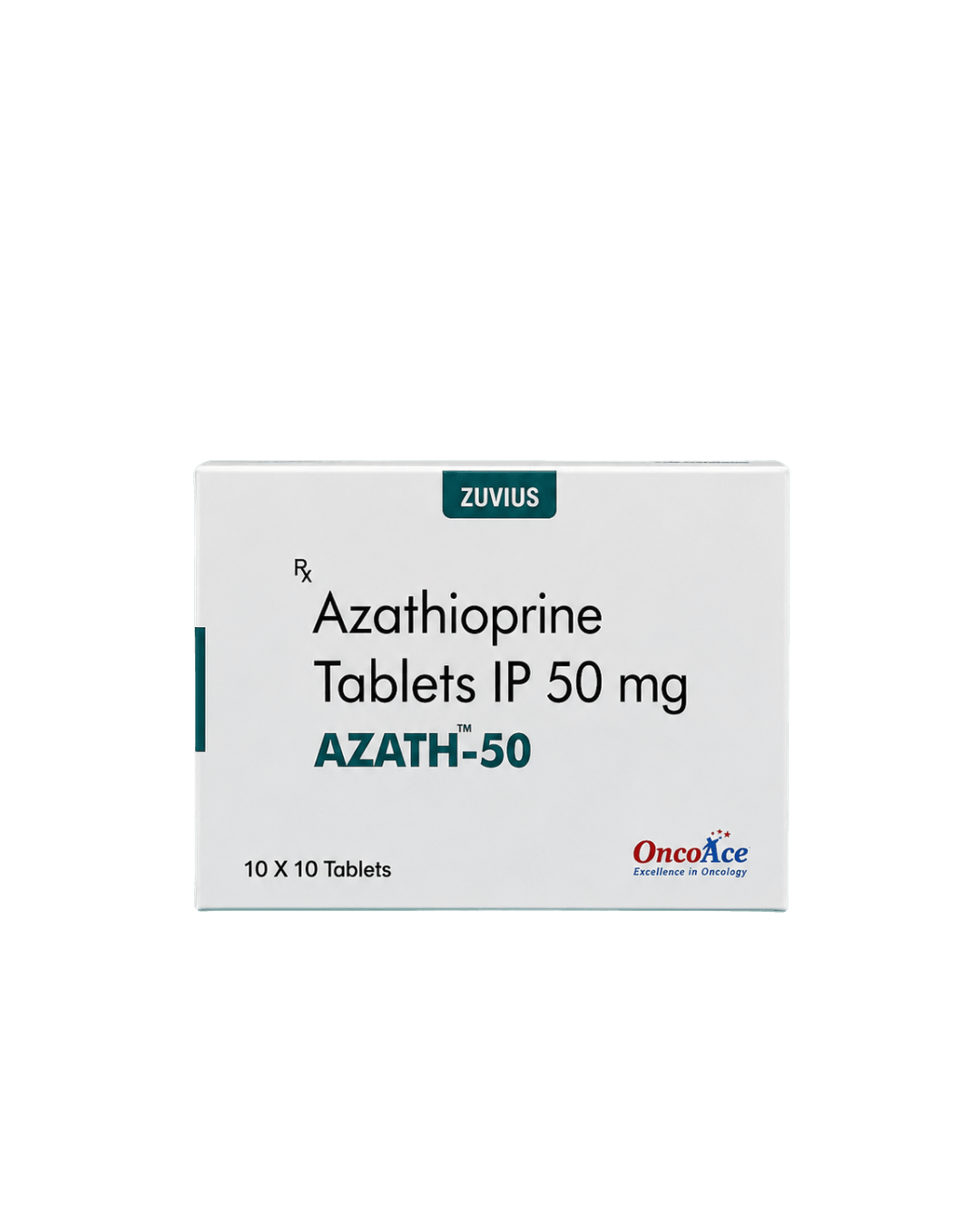
Azath
Azathioprine Tablets

Strength
✓50 mg

Pack Size
Tablet

Drug Class
Antineoplastic and Immunosuppressive agents

Specification
USP/BP/IH Specs offered for exports

Storage
Store at 25°C to 30°C.
Azathioprine is an immunosuppressive antimetabolite available in tablet form for oral administration.
Each scored tablet contains
- 25 mg
- 50 mg
- 75 mg
- 100 mg azathioprine
Inactive ingredients include
- croscarmellose sodium
- lactose monohydrate
- magnesium stearate
- maize starch
- povidone K30
Azathioprine is chemically
6-[(1-methyl-4-nitro-1H-imidazol-5-yl)thio]-1H-purine.
It is an imidazolyl derivative of 6-mercaptopurine and many of its biological effects are similar to those of the parent compound.
Azathioprine is indicated
- As an adjunct for prevention of rejection in renal homotransplantation
- For management of active rheumatoid arthritis to reduce signs and symptoms
Renal Homotransplantation
- Used as adjunct therapy for prevention of rejection in kidney transplantation.
Rheumatoid Arthritis
- Used for treatment of active rheumatoid arthritis (RA).
- Aspirin, NSAIDs, and low-dose glucocorticoids may be continued during therapy.
Azathioprine is used to prevent rejection of transplanted kidneys.
It belongs to the group of medicines known as immunosuppressive agents.
Azathioprine lowers the body's natural immunity in transplant patients to prevent rejection of the new kidney.
It is also used to relieve joint pain and swelling in patients with active rheumatoid arthritis.
- Chronic immunosuppression with azathioprine increases risk of malignancy in humans.
- Reports of malignancy include:
- post-transplant lymphoma
- hepatosplenic T-cell lymphoma (HSTCL)
- Physicians should be familiar with:
- malignancy risk
- mutagenic potential
- hematologic toxicities
- Patients should be informed about the malignancy risks associated with azathioprine therapy.
Renal Homotransplantation
- Initial dose:
- 3 to 5 mg/kg daily
- beginning at time of transplant
- Azathioprine is usually given as a single daily dose.
- Dose reduction to maintenance levels of 1 to 3 mg/kg daily is usually possible.
Rheumatoid Arthritis
- Initial dose:
- approximately 1.0 mg/kg (50 to 100 mg)
- May be given:
- as single dose
- or twice daily schedule
- Dose may be increased beginning at 6 to 8 weeks if response is unsatisfactory.
- Maximum dose:
- 2.5 mg/kg per day
Use in Renal Dysfunction
- Patients with renal dysfunction may require lower doses due to delayed clearance.