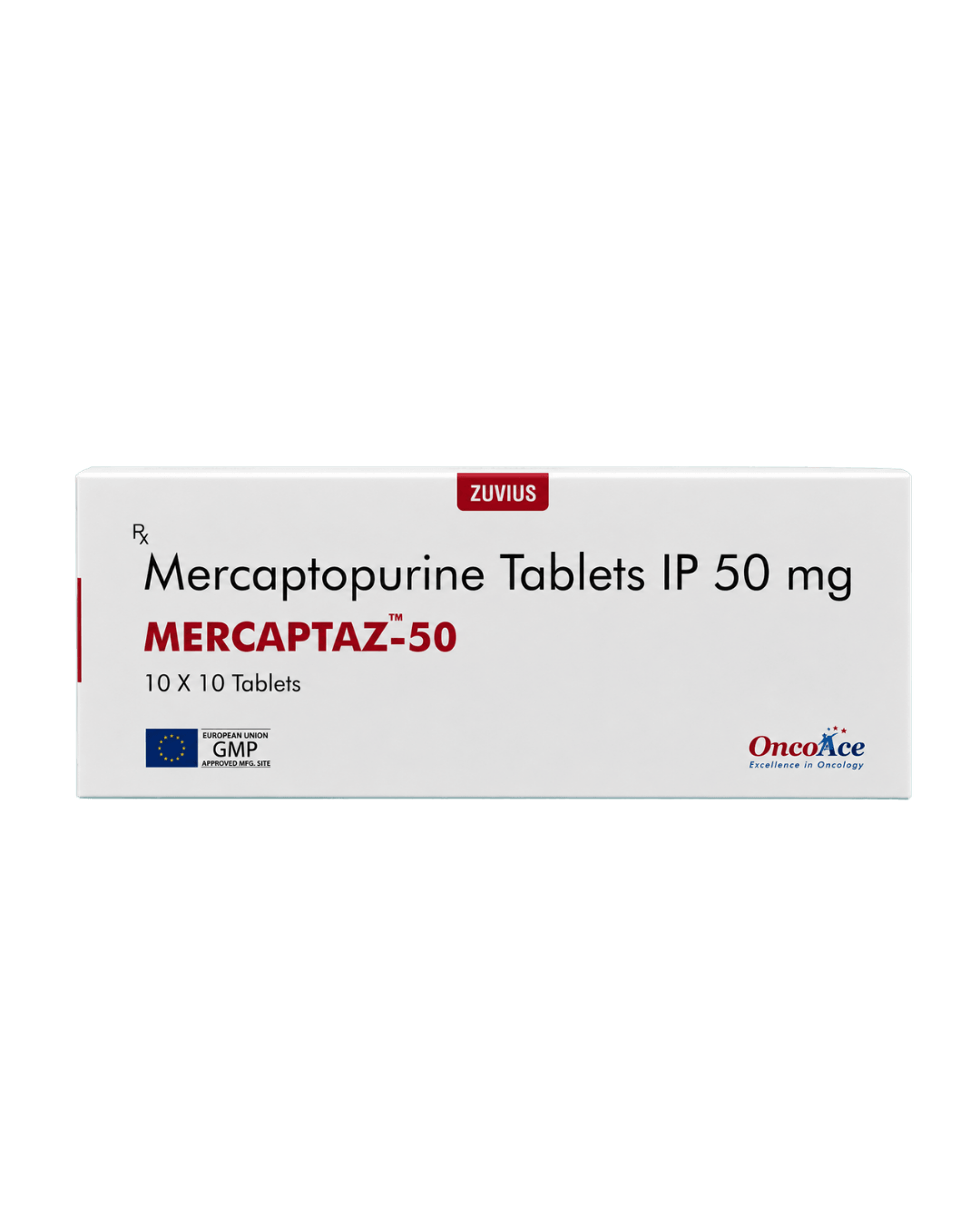
Mercaptaz
Mercaptopurine Tablets

Strength
✓50 mg

Pack Size
1 x 10

Drug Class
Purine Antagonists

Specification
USP/BP/IH Specs offered for exports

Storage
Store at 25°C to 30°C.
It is a medication used for cancer and autoimmune diseases.
Specifically it is used to treat
- Acute lymphocytic leukemia
- Acute promyelocytic leukemia
- Crohn’s disease
- Ulcerative colitis
6-mercaptopurine is indicated for the treatment of acute leukaemia in adults, adolescents and children.
It may be utilised in
- Acute lymphoblastic leukaemia (ALL)
- Acute promyelocytic leukaemia (APL) / Acute myeloid leukaemia M3 (AML M3)
6-Mercaptopurine (6-MP) has confirmed short and long term efficacy in the treatment of IBD.
However, the relation between its metabolism, efficacy, and side effects is not well understood.
To assay 6-MP metabolites and to correlate levels with drug compliance, disease activity, and adverse effects of treatment.
6-mercaptopurine has been shown to produce good clinical and hematologic remissions in fifteen out of forty-five children with acute leukaemia.
Another ten showed partial remissions and clinical improvement.
Genotoxicity
6-mercaptopurine, in common with other antimetabolites, is mutagenic and causes chromosomal aberrations in vitro and in vivo in mice and rats.
Carcinogenicity
Given its genotoxic potential, 6-mercaptopurine is potentially carcinogenic.
Teratogenicity
6-mercaptopurine causes embryo lethality and severe teratogenic effects in the mouse, rat, hamster and rabbit at doses that are non-toxic to the mother.
In all species, the degree of embryotoxicity and the type of malformations are dependent on the dose and stage of the gestation at the time of administration.
For adults and children the usual dose is 2.5 mg/kg bodyweight per day, or 50 to 75 mg/m² body surface area per day, but the dose and duration of administration depend on the nature and dosage of other cytotoxic agents given in conjunction with 6-mercaptopurine.