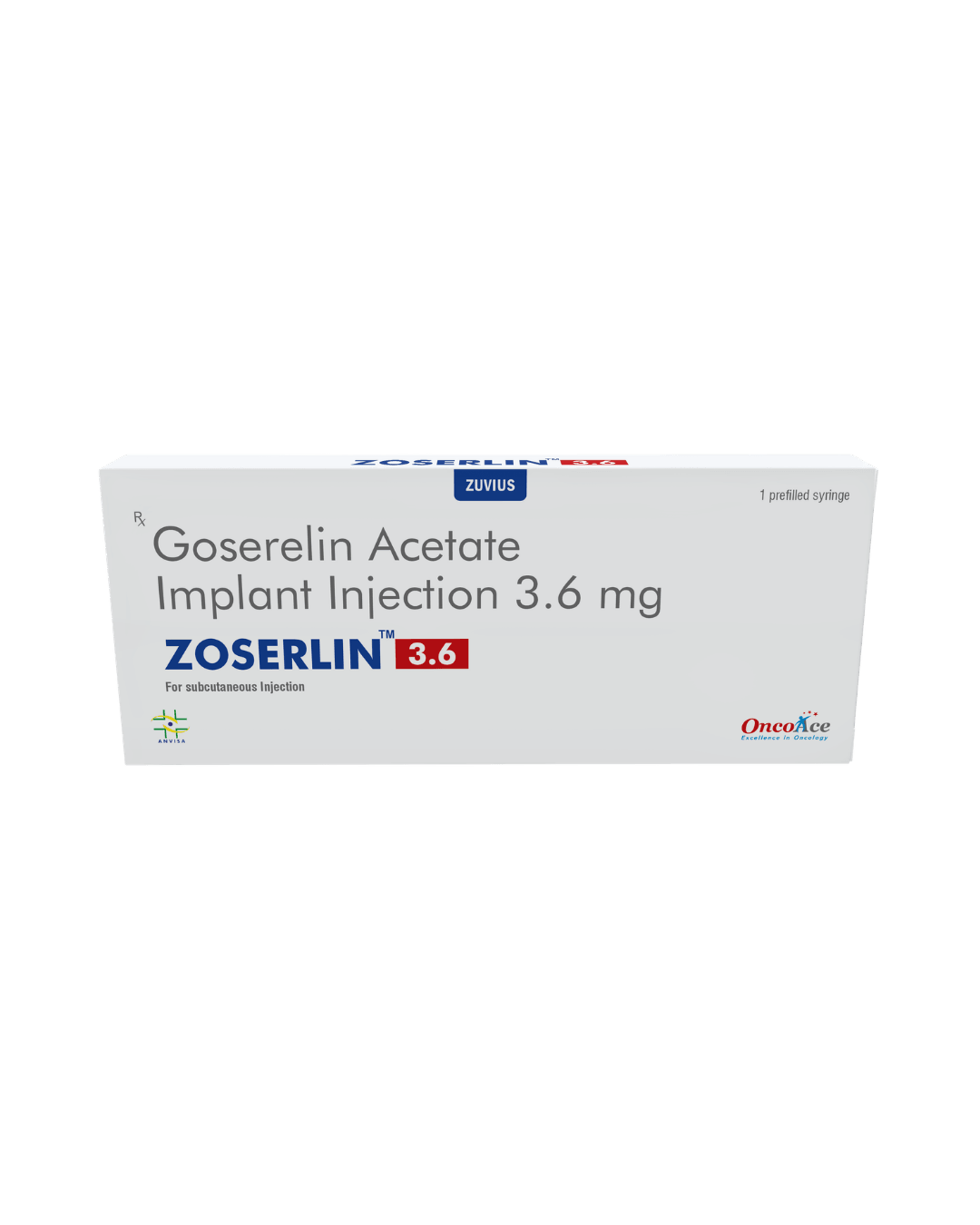
Zoserlin
Goserelin Acetate Implant Injection

Strength
✓3.6 mg

Pack Size
1 PFS

Drug Class
Gonadotropin-Releasing Hormone (GnRH) Agonist

Specification
USP/BP/IH Specs offered for exports

Storage
Store at 25°C to 30°C.
Zoserlin contains goserelin acetate and belongs to a group of medicines called luteinising hormone-releasing hormone analogues, also known as LHRH analogues.
Mechanism of Action in Men
Zoserlin reduces the amount of testosterone produced by the body.
Mechanism of Action in Women
Zoserlin reduces the amount of oestrogen produced by the body.
Each prefilled injection contains
- Goserelin acetate equivalent to Goserelin 3.6 mg
- Peptide base in a sustained-release depot
- Lactide/Glycolide Copolymer
In Men
Zoserlin is indicated for the treatment of prostate cancer.
In Women
Zoserlin is used to
- Treat breast cancer
- Treat endometriosis
- Treat benign uterine fibroids
- Make the lining of the uterus thinner before surgery
- Support infertility treatment when used with other medicines that control the release of eggs from the ovaries
Hormonal Suppression in Men
Zoserlin reduces testosterone production.
This hormonal suppression supports the treatment of hormone-sensitive conditions such as prostate cancer.
Hormonal Suppression in Women
Zoserlin reduces oestrogen production.
This hormonal suppression supports the treatment of conditions such as breast cancer, endometriosis and uterine fibroids.
Contraindications
Do not use Zoserlin
- If you are allergic to goserelin or any of the ingredients in the formulation.
- During pregnancy.
- During breastfeeding.
Very Common Side Effects in Men and Women
- Hot flushes
- Sweating
- Reduced sex drive
- Pain at the injection site
- Bruising
- Bleeding
- Redness
- Swelling at the injection site
Common Side Effects
- Thinning of bones
- Tingling in the fingers or toes
- Skin rash
- Hair loss
- Weight gain
- Joint pain
- Changes in blood pressure
- Mood changes, including depression
Rare Allergic Reactions
- Rash
- Itching
- Hives
- Swelling of the face, lips or tongue
- Difficulty breathing
Injection-Site Injury
Injection-site injury may include damage to blood vessels in the abdomen, which can cause severe bleeding.
Possible symptoms include
- Abdominal pain
- Abdominal swelling
- Shortness of breath
- Dizziness
- Low blood pressure
- Altered consciousness
Very Rare Side Effects
- Psychotic disorders
- Bleeding or collapse of a pituitary tumour
Side Effects With Unknown Frequency
- Changes in blood test results
- Liver problems
- Blood clot in the lungs
- Inflammation of the lungs
- QT interval prolongation
Additional Side Effects in Men
Very common
- Impotence
Common
- Lower back pain
- Difficulty passing urine
- Bone pain at the beginning of treatment
- Reduced heart function
- Heart attack
- Swelling and tenderness of the breasts
- Increased blood sugar
Additional Side Effects in Women
Very common
- Vaginal dryness
- Changes in breast size
- Acne
Common
- Headache
Rare
- Ovarian cysts
- Early menopause, with periods not returning after treatment
Side effects with unknown frequency
- Vaginal bleeding
- Temporary increase in fibroid symptoms
Additional Side Effects When Used for Endometriosis, Uterine Fibroids, Infertility or Thinning of the Uterus:
- Changes in body hair
- Dry skin
- Weight gain
- Increased cholesterol
- Vaginal inflammation
- Vaginal discharge
- Nervousness
- Sleep disturbances
- Tiredness
- Swelling of the feet and ankles
- Muscle pain
- Leg cramps
- Nausea
- Vomiting
- Diarrhoea
- Constipation
- Voice changes
When Used for Breast Cancer
- Temporary worsening of breast cancer symptoms at the beginning of treatment
- Increased blood calcium
When Used for Infertility with Gonadotrophins
- Excessive ovarian stimulation
- Stomach pain
- Abdominal swelling
- Nausea
- Vomiting
Administration
- Administered as a subcutaneous injection under the skin of the abdomen.
- The injection is given once every 4 weeks or every 28 days.
- Treatment should continue until the treating doctor decides to stop.
Duration of Treatment in Women
- Uterine fibroids: Up to 3 months.
- Endometriosis: Up to 6 months.
- Thinning of the uterine lining before surgery: 1 to 2 months, equivalent to 4 to 8 weeks.