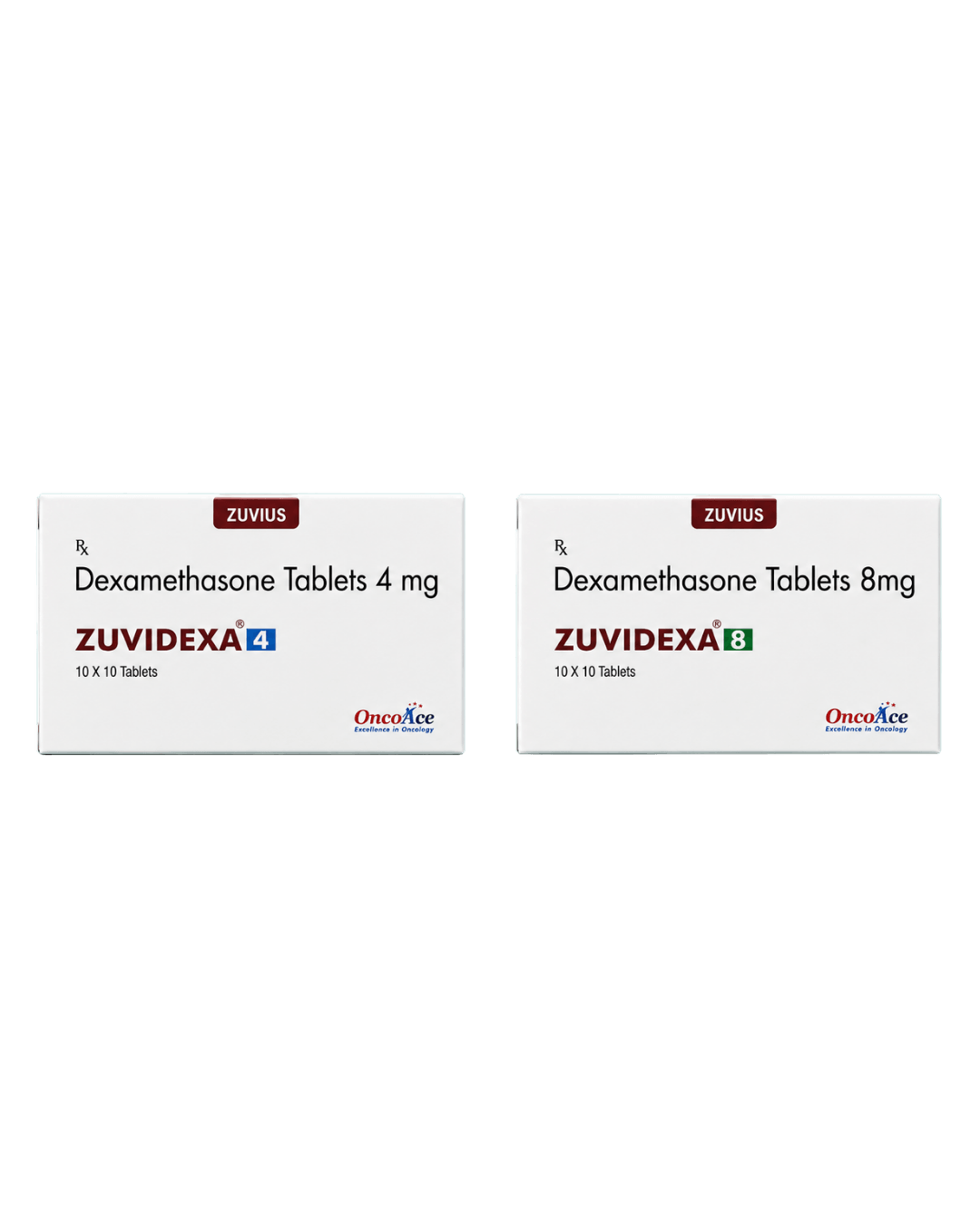
Zuvidexa
Dexamethasone Tablets

Strength
✓4 mg

Pack Size
1 x 10

Drug Class
Corticosteroids

Specification
USP/BP/IH Specs offered for exports

Storage
Store at 25°C to 30°C.
Zuvidexa contains Dexamethasone, a synthetic glucocorticoid belonging to the corticosteroid class of medicines.
Dexamethasone is a white or almost white crystalline powder.
It is practically insoluble in water, sparingly soluble in anhydrous ethanol and slightly soluble in methylene chloride.
Each Zuvidexa tablet contains 4 mg of Dexamethasone as the active ingredient.
The tablet may also contain excipients such as
- Lactose
- Magnesium stearate
- Povidone
- Maize starch
The molecular formula of Dexamethasone is C22H29FO5 and its molecular weight is 392.5.
Zuvidexa may be used in the treatment or management of the following conditions:
Allergic Conditions
- Severe asthma
- Atopic dermatitis
- Contact dermatitis
- Drug hypersensitivity reactions
- Perennial or seasonal allergic rhinitis
- Serum sickness
Dermatological Diseases
- Bullous dermatitis herpetiformis
- Exfoliative erythroderma
- Mycosis fungoides
- Pemphigus
- Severe erythema multiforme, including Stevens-Johnson syndrome
Endocrine Disorders
- Primary or secondary adrenocortical insufficiency
- Congenital adrenal hyperplasia
- Hypercalcaemia associated with cancer
- Nonsuppurative thyroiditis
Gastrointestinal Diseases
- Regional enteritis
- Ulcerative colitis during critical periods of the disease
Haematological Disorders
- Acquired autoimmune haemolytic anaemia
- Congenital hypoplastic anaemia
- Idiopathic thrombocytopenic purpura in adults
- Pure red cell aplasia
- Selected cases of secondary thrombocytopenia
Neoplastic Diseases
- Palliative management of leukaemias
- Palliative management of lymphomas
Nervous System Disorders
- Acute exacerbations of multiple sclerosis
- Cerebral oedema associated with primary or metastatic brain tumours
- Cerebral oedema following craniotomy or head injury
Ophthalmic Diseases
- Sympathetic ophthalmia
- Temporal arteritis
- Uveitis
- Ocular inflammatory conditions unresponsive to topical corticosteroids
Renal Diseases
- Induction of diuresis or remission of proteinuria in idiopathic nephrotic syndrome
- Proteinuria associated with systemic lupus erythematosus
Respiratory Diseases
- Berylliosis
- Fulminating or disseminated pulmonary tuberculosis when used with appropriate antituberculous treatment
- Idiopathic eosinophilic pneumonia
- Symptomatic sarcoidosis
Rheumatic Disorders
- Acute gouty arthritis
- Acute rheumatic carditis
- Ankylosing spondylitis
- Psoriatic arthritis
- Rheumatoid arthritis
- Juvenile rheumatoid arthritis
- Dermatomyositis
- Polymyositis
- Systemic lupus erythematosus
Other Uses
- Diagnostic testing of adrenocortical hyperfunction
- Trichinosis with neurological or myocardial involvement
- Tuberculous meningitis with subarachnoid block or impending block when used with appropriate antituberculous chemotherapy
Dexamethasone is a synthetic glucocorticoid that is readily absorbed from the gastrointestinal tract.
Glucocorticoids produce a range of metabolic effects and modify the body's immune response to various stimuli.
Naturally occurring glucocorticoids such as hydrocortisone and cortisone also have sodium-retaining properties and are commonly used as replacement treatment in adrenocortical deficiency.
Synthetic glucocorticoids such as Dexamethasone are primarily used because of their potent anti-inflammatory and immunosuppressive effects.
At equivalent anti-inflammatory doses, Dexamethasone has very little sodium-retaining activity compared with hydrocortisone and closely related corticosteroids.
General Safety Information
- Keep Zuvidexa out of the reach of children.
- Use only in the dose and for the duration prescribed by the treating doctor.
- Do not stop prolonged corticosteroid treatment suddenly unless advised by a doctor.
- Long-term or high-dose corticosteroid treatment may increase the risk of infections and other adverse effects.
- The lowest effective dose should be used to reduce the risk of side effects.
Recommended Dosage
- Dexamethasone is generally administered in doses ranging from 0.5 mg to 10 mg daily, depending on the disease being treated.
- In severe disease conditions, doses above 10 mg per day may be required.
- The dosage should be adjusted according to the individual patient's response and the severity of the disease.
- To minimise side effects, the lowest effective dose should be used.
The exact dose and duration of treatment should be determined by the treating doctor.