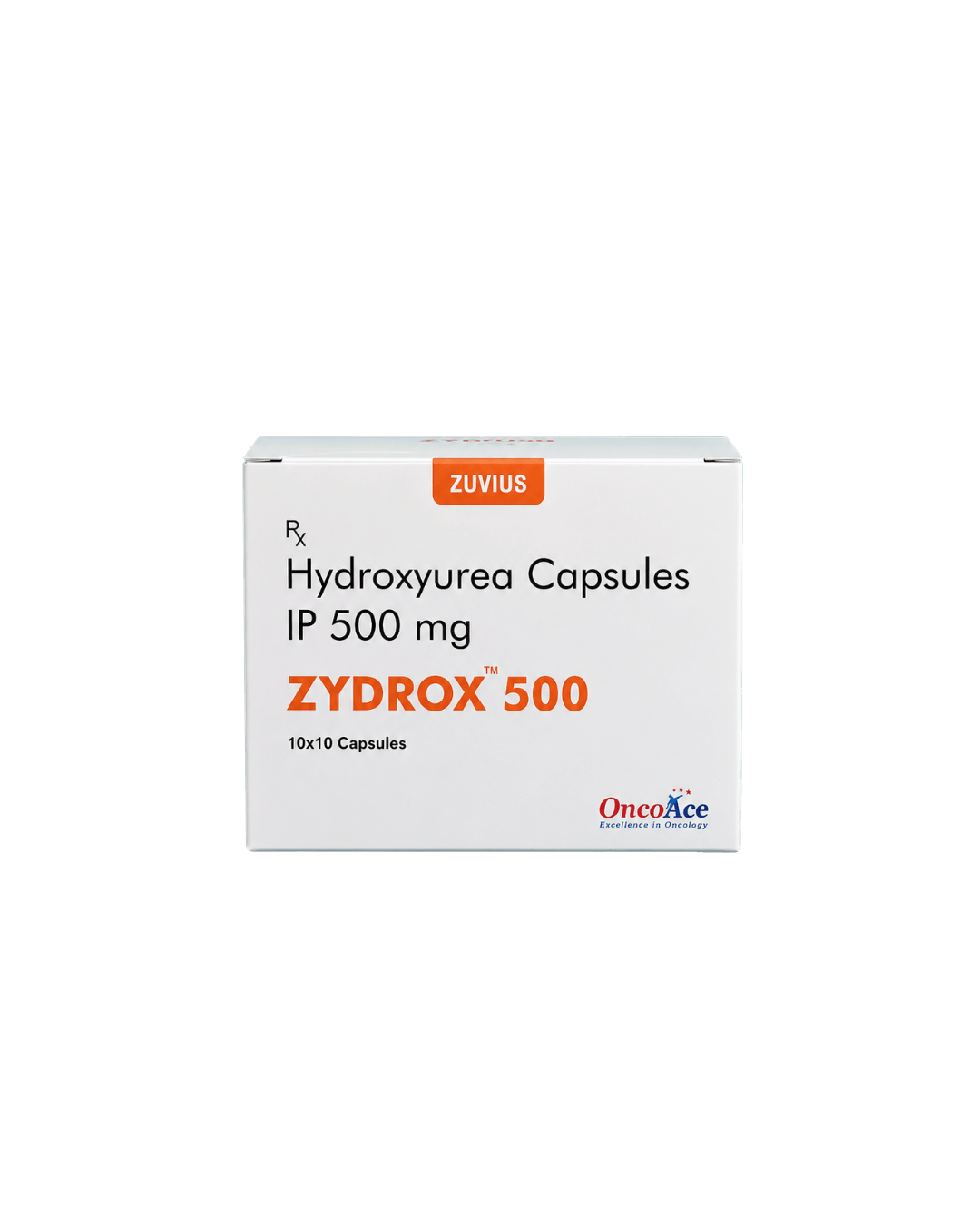
Zydrox Cap
Hydroxyurea Capsules

Strength
✓500 mg

Pack Size
1 x 10 Capsules

Drug Class
Antimetabolites

Specification
USP/BP/IH Specs offered for exports

Storage
Store at 25°C to 30°C.
Hydroxyurea is an antimetabolite available for oral use as capsules containing 500 mg of hydroxyurea.
Hydroxyurea is a white to off-white crystalline powder. It is hygroscopic and freely soluble in water, but practically insoluble in alcohol.
Its empirical formula is CH4N2O2 and its molecular weight is 76.05.
Hydroxyurea is indicated for the treatment of
- Resistant chronic myeloid leukemia.
- Locally advanced squamous cell carcinomas of the head and neck, excluding the lip, in combination with chemoradiation.
Hydroxyurea may be used alone or with other medicines or radiation therapy for certain types of chronic myelogenous leukemia and cancers of the mouth, cheek, tongue, throat, tonsils and sinuses.
Available clinical evidence indicates that hydroxyurea is generally well tolerated, safe and effective for many patients with sickle cell disease.
Hydroxyurea has demonstrated clinical efficacy in reducing acute vaso-occlusive events, including painful episodes and acute chest syndrome.
Hydroxyurea may increase the risk of developing secondary cancers, including skin cancer.
Patients should avoid unnecessary or prolonged exposure to sunlight and should use protective clothing, sunglasses and sunscreen.
Patients should discuss the potential benefits and risks of hydroxyurea treatment with their healthcare professional.
Dosage Forms and Strengths
Hydroxyurea is available as capsules in strengths of 200 mg, 300 mg, 400 mg and 500 mg.
Solid Tumors
- Intermittent therapy: 80 mg/kg orally every 3 days.
- Continuous therapy: 20–30 mg/kg orally once daily.
Head and Neck Tumors
- 80 mg/kg orally every 3 days in combination with irradiation.
- Begin treatment 7 days before initiation of irradiation.
Resistant Chronic Myelocytic Leukemia
- Continuous therapy: 20–30 mg/kg orally once daily.
Sickle Cell Disease
- Initial dose: 15 mg/kg/day as a single dose.
- Monitor complete blood counts every 2 weeks.
- Titrate by 5 mg/kg/day every 12 weeks.
- Maximum dose: 35 mg/kg/day.
- Discontinue therapy until hematologic recovery if blood counts become toxic.
- Treatment may be resumed at a dose reduced by 2.5 mg/kg/day from the dose associated with hematologic toxicity.
Essential Thrombocythaemia
- 15 mg/kg orally once daily.
- Titrate to control platelet count while maintaining an acceptable white blood cell count.
HIV Adjunct Treatment
- 500 mg orally twice daily with antiretroviral therapy.
Psoriasis
- 1000–1500 mg/day orally, given once or twice daily.
Monitoring
- Monitor complete blood counts regularly.