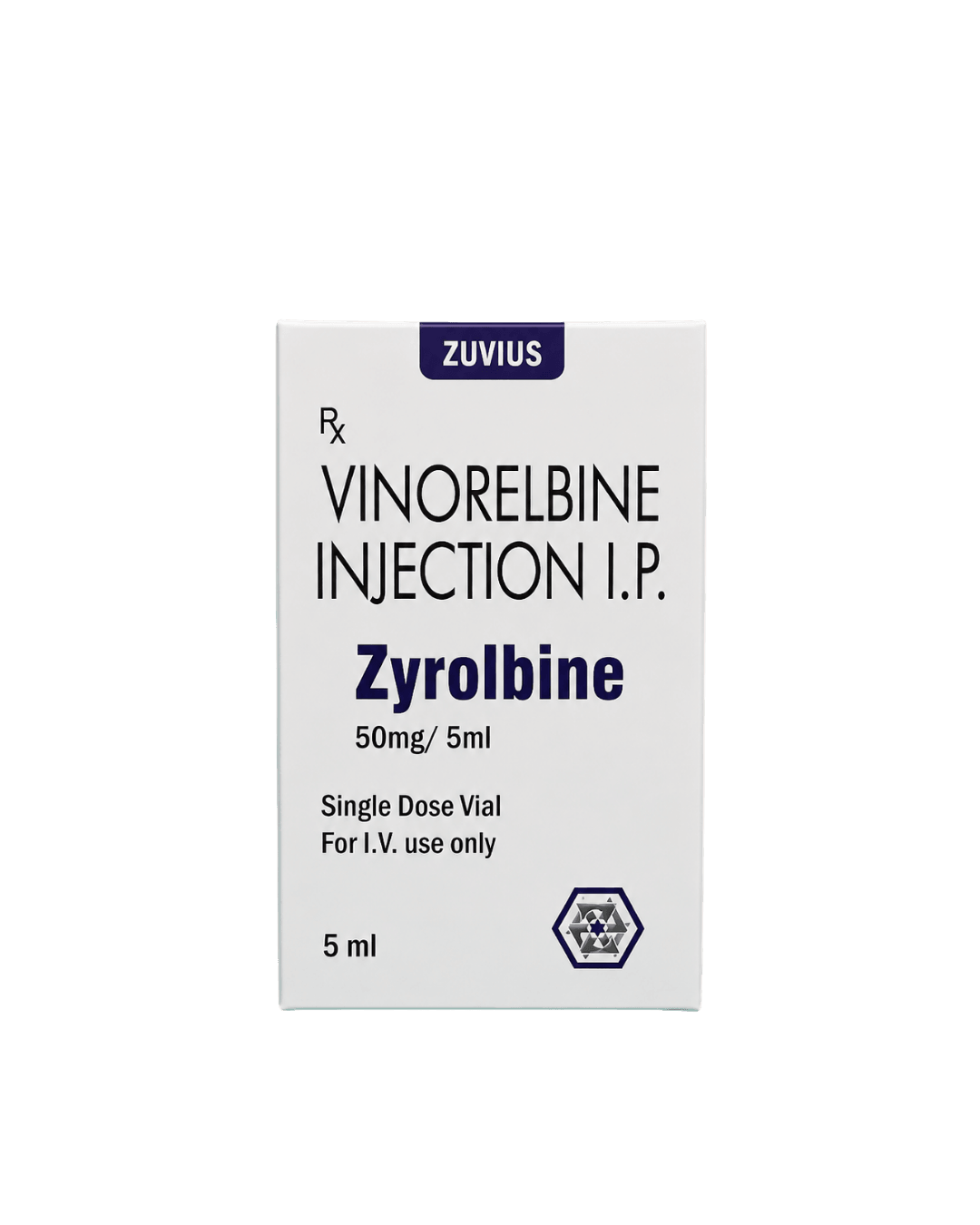
Zyrolbine
Vinorelbine Injection

Strength
✓10 mg✓50 mg

Pack Size
Vial

Drug Class
Antineoplastic Drug, Antimetabolite

Specification
USP/BP/IH Specs offered for exports

Storage
Store refrigerated at 2°C to 8°C.
Vinorelbine injection is an antineoplastic agent that belongs to the class of antimetabolites.
It is available as a sterile solution for intravenous administration.
Vinorelbine is a semi-synthetic vinca alkaloid, derived from the leaves of the periwinkle plant (Vinca rosea).
It is a clear, colorless to pale yellow solution.
Vinorelbine injection is indicated for the treatment of non-small cell lung cancer (NSCLC).
It is used as a single agent or in combination with other chemotherapeutic agents.
Vinorelbine has also demonstrated efficacy in the treatment of metastatic breast cancer and may be used in other cancers as determined by a healthcare professional.
Metronomic oral vinorelbine monotherapy shows promising results for patients with stage IIIB/IV and advanced non-small cell lung cancer (NSCLC).
- Overall Response Rate (ORR): 12% (95% CI 5-20)
- Disease Control Rate (DCR): 48% (95% CI 38-59)
- Median Progression-Free Survival (PFS): 3.46 months (95% CI 2.49-4.43)
- Overall Survival (OS): 8.22 months (95% CI 7.21-9.24)
The treatment has an acceptable safety profile, with 16% (95% CI 10-22) of patients experiencing grade 3/4 adverse events (AEs), primarily neutropenia at 9% (95% CI 2-20) and leukopenia at 8% (95% CI 1-19).
This therapy is particularly beneficial for untreated elderly patients due to its convenience, lower cost, and manageable toxicity.
Pregnancy
Vinorelbine is classified as a pregnancy category D drug, indicating positive evidence of human fetal risk based on adverse reaction data from investigational or marketing experience.
Pregnant women should avoid vinorelbine unless the potential benefits justify the potential risks to the fetus.
Breastfeeding
Vinorelbine should not be administered to breastfeeding mothers. The potential for serious adverse reactions in nursing infants from vinorelbine is high.
Fertility
Vinorelbine may impair fertility in both men and women. Women may experience suppression of ovarian function leading to amenorrhea, while men may experience azoospermia.
Some recovery of fertility may occur post-treatment, but this is not guaranteed.
Teratogenicity
Like other cytotoxic agents, vinorelbine carries a risk of teratogenic effects. Exposure during pregnancy can result in fetal harm including congenital anomalies and fetal death.
Special Precautions
- Tell your doctor and pharmacist if you are allergic to vinorelbine or any other medications.
- Inform your doctor about prescription drugs, vitamins, nutritional supplements, and herbal products you are taking.
- Tell your doctor if you have liver disease.
- Use effective birth control during and after treatment.
- Do not breastfeed during treatment and for 9 days after the final dose.
- Vinorelbine may cause constipation. Consult your doctor regarding diet and preventive medications.
Vinorelbine injection is an antineoplastic drug classified as an antimetabolite. It is available in a strength of 10 mg per vial.
The usual dosage for the treatment of non-small cell lung cancer (NSCLC) is 25–30 mg/m², administered intravenously once weekly.
The injection is typically diluted in 50 mL of normal saline and given over 6–10 minutes.
The dose and frequency may be adjusted based on the patient's response and tolerance to the treatment.
Vinorelbine should be stored under cold conditions, and the specific protocol provided by an oncologist or healthcare professional must be followed to ensure safe and effective use.