Adrenal Cancer
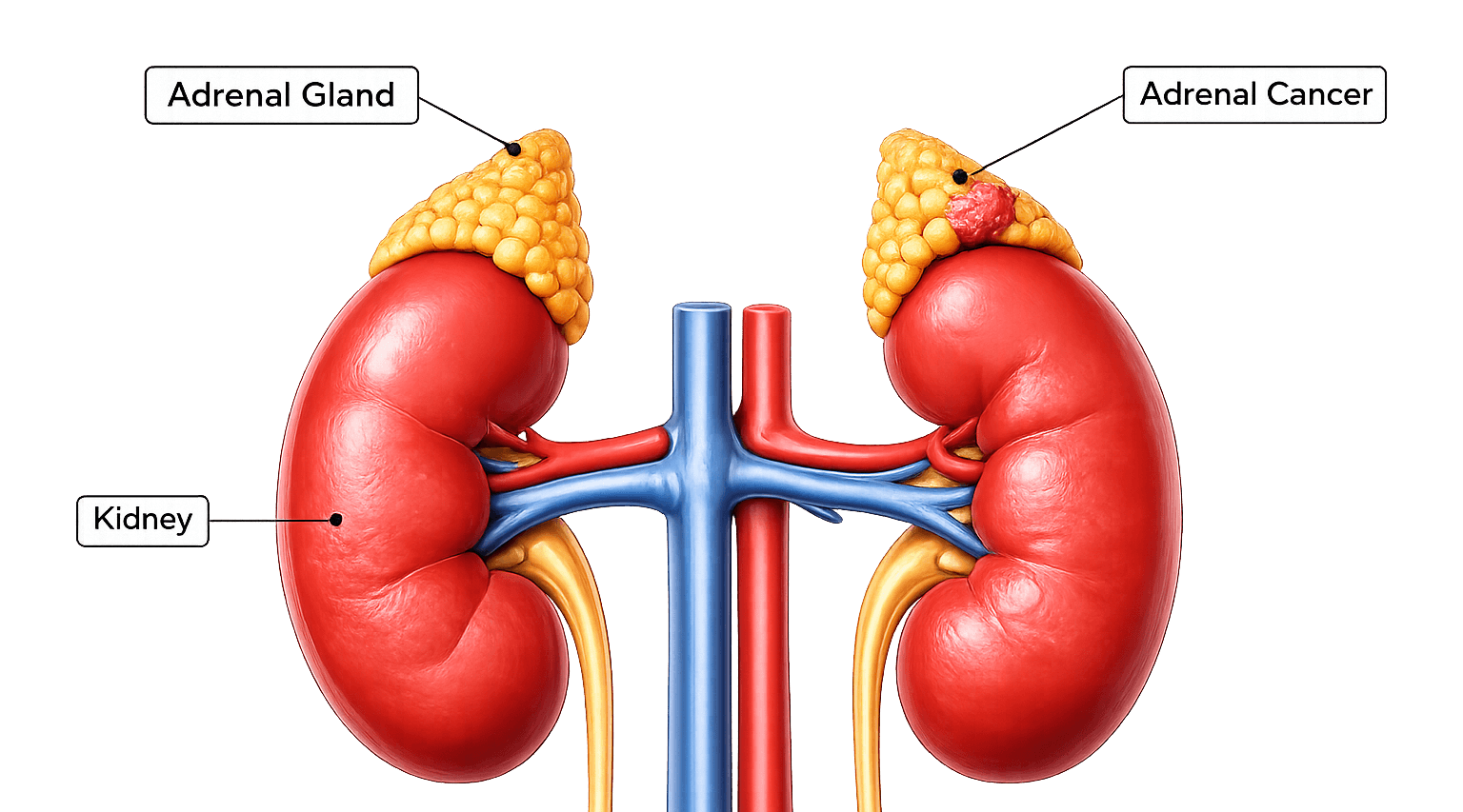
The adrenal glands are small hormone-producing glands located above each kidney.They help regulate important body functions including metabolism, blood pressure, stress response and growth.
Overview
Adrenal cancer is a rare type of cancer that develops when abnormal cells in the adrenal glands grow uncontrollably and form a tumor. The adrenal glands sit above each kidney and produce hormones that help regulate several essential processes throughout the body. This cancer may affect one or both adrenal glands and can behave differently depending on the type of tumor involved.
Because adrenal tumors can sometimes produce excess hormones, people may experience a wide range of symptoms or, in some cases, no symptoms at all. Some adrenal cancers are discovered unexpectedly during imaging tests performed for unrelated medical concerns. While adrenal cancer can be challenging to treat, early detection and appropriate treatment may offer the best chance for successful disease management.
Risk Factors
Factors We Cannot Control

Inherited Gene Mutation
Some people inherit gene mutations from a biological parent, which may increase their risk of adrenal cancer.

Genetic Disorders
Some adrenal tumors are linked to genetic disorders, especially in children.
Lifestyle & Health Factors

Smoking
Smoking is listed as a possible environmental risk factor for adrenal cancer.

Chemical Exposure
Exposure to certain chemicals, including asbestos and radon, may increase risk.
Prior Abdominal Radiation
Previous radiation therapy to the abdomen may increase the risk of adrenal cancer.
Symptoms
1. Abdominal Pain
Pain in the belly may occur when the tumor grows and presses on nearby organs.

2. Back Pain
Back pain may happen as the tumor grows or affects nearby tissues.

3. Belly Fullness
Some people may feel fullness or pressure in the belly.

4. Muscle Cramps
Muscle cramps may occur as part of general adrenal cancer symptoms.

5. Hormone Changes
Extra hormones may cause symptoms such as high blood pressure, low potassium, weight changes, fast heartbeat, anxiety or panic attacks.

6. Metastatic Symptoms
If cancer spreads, symptoms may include nausea, vomiting, bloating, fatigue, fever, confusion or loss of appetite.

Diagnosis
1. Physical Examination
A healthcare provider may perform a physical examination and look for signs related to adrenal cancer.

2. Medical History
Your provider may review your medical history, symptoms, risk factors and family history of cancer.

3. Blood Tests
Blood tests may help check hormone levels and support the diagnosis.

4. Urine Tests
Urine tests may help detect abnormal hormone activity related to adrenal tumors.

5. Imaging Tests
Imaging tests such as CT or MRI may find adrenal tumors or help check whether cancer has spread.

Treatments
1. Surgery
Surgery is usually recommended when cancer is in the adrenal gland or has spread only to very nearby tissues or lymph nodes.

2. Adrenalectomy
Adrenalectomy removes the entire adrenal gland. If only one gland is removed, the other gland usually works properly.

3. Radiation Therapy
Radiation therapy may be used after surgery to reduce recurrence risk or to treat areas where cancer has spread.

4. Chemotherapy
Chemotherapy uses medicines to kill cancer cells and may be used after surgery or when cancer has spread.

5. Mitotane
Mitotane is the most common chemotherapy medicine used for cancer in the adrenal glands.

6. Other Medicines
Some medicines may reduce adrenal hormone production or block the effects of hormones released by the tumor.
