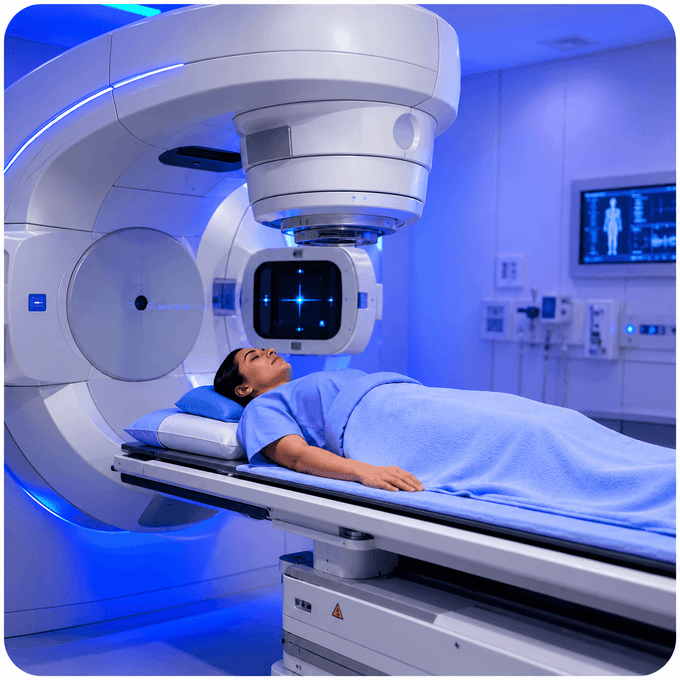
Gallbladder Cancer
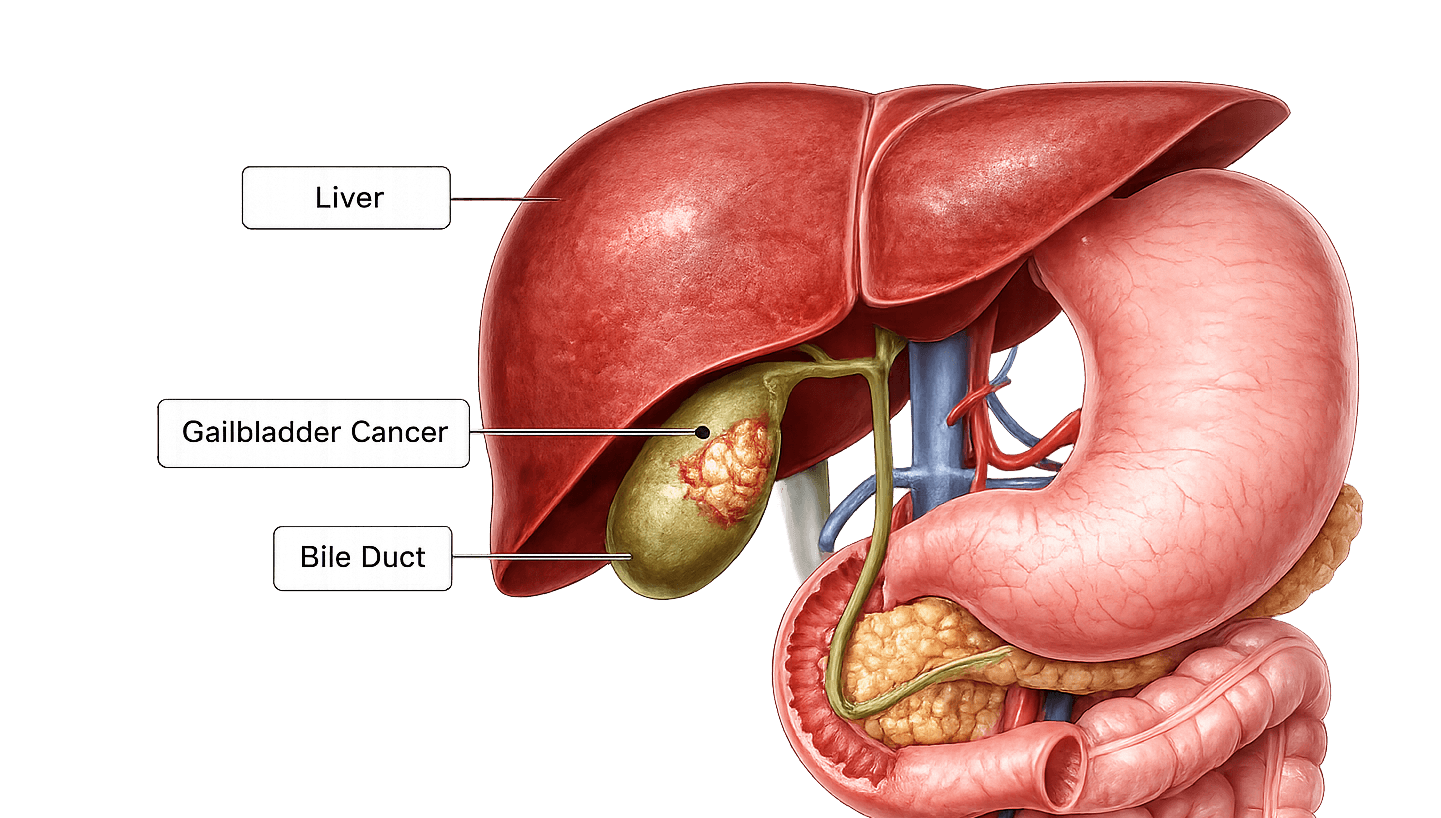
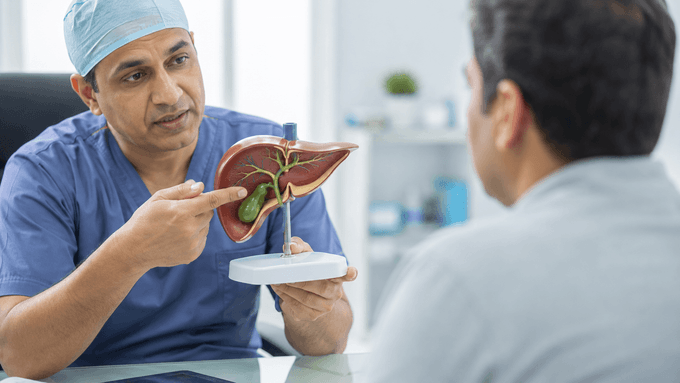
The gallbladder is a small, pear-shaped organ situated beneath the liver. Its role is to store and release bile, a fluid produced by the liver that helps break down fats from the food you consume.
Overview
Gallbladder cancer develops when abnormal cells in the gallbladder grow uncontrollably and form a tumor. It is a relatively rare cancer and often begins in the inner lining of the gallbladder before potentially spreading into deeper layers of tissue. The disease may develop gradually and can be difficult to detect in its early stages.
Many people with gallbladder cancer do not experience noticeable symptoms early in the disease, which means it is often diagnosed after it has progressed. Treatment options and outcomes depend on factors such as the cancer’s stage and whether it has spread beyond the gallbladder. Early diagnosis can help improve treatment opportunities and overall outcomes.
Risk Factors
Factors We Cannot Control
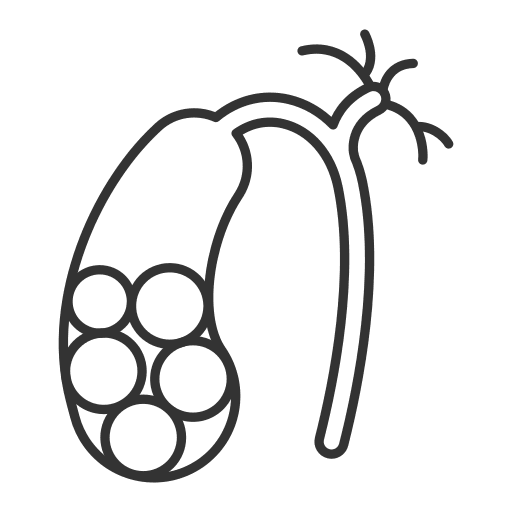
Gallstones
Gallstones are the most common risk factor associated with gallbladder cancer.
Older Age
Gallbladder cancer is more common in older adults.

Sex
Gallbladder cancer occurs more often in women than men.

Gallbladder Polyps
Certain gallbladder polyps may increase the risk of cancer.
Lifestyle & Health Factors

Obesity
Obesity is associated with an increased risk of gallbladder cancer.
Symptoms
1. Abdominal Pain
Pain in the upper right side of the abdomen may occur.

2. Abdominal Bloating
Some people develop abdominal swelling or bloating.

3. Nausea and Vomiting
Nausea and vomiting may occur as the disease progresses.

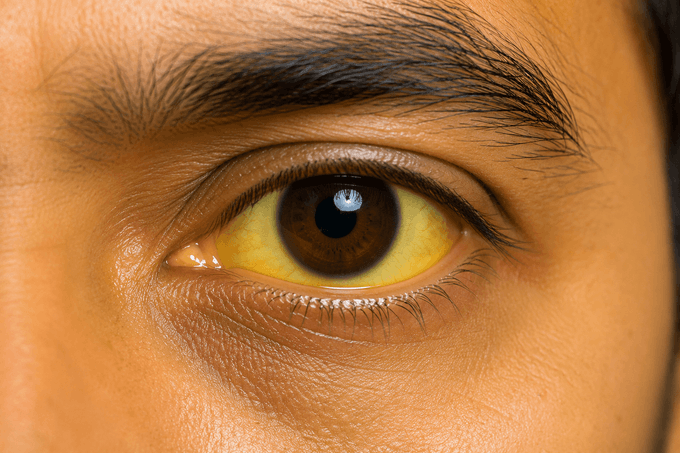
4. Jaundice
Yellowing of the skin and eyes may develop when bile ducts become blocked.
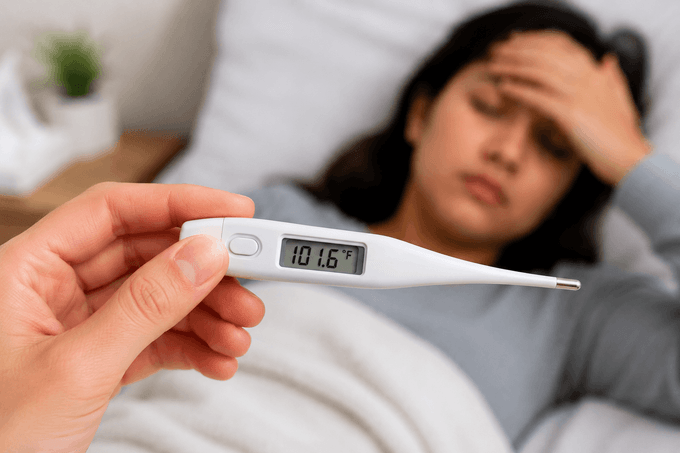
5. Fever
Some people may develop a fever.
6. Lumps in the Abdomen
A healthcare provider may be able to feel a mass in the abdomen.

Diagnosis
1. Physical Examination
A provider may perform a physical examination and review symptoms and medical history.

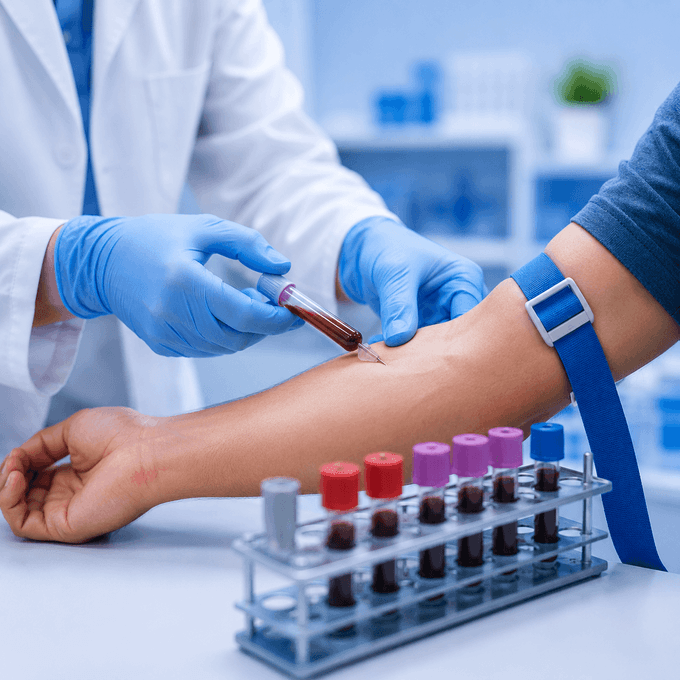
2. Blood Tests
Blood tests may help evaluate liver function and look for signs of disease.
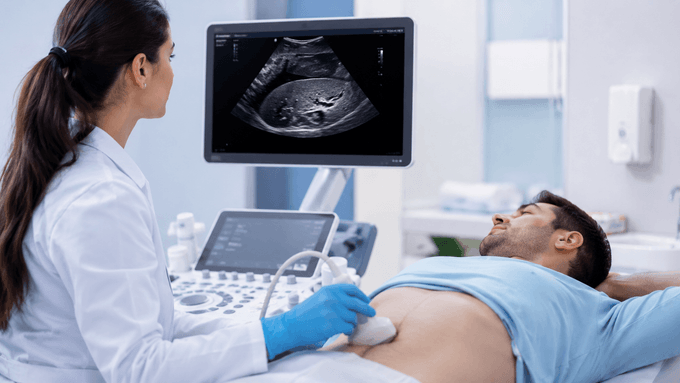
3. Ultrasound
Ultrasound imaging may help identify abnormalities in the gallbladder.
4. CT Scan
CT scans may help determine the size and spread of the cancer.
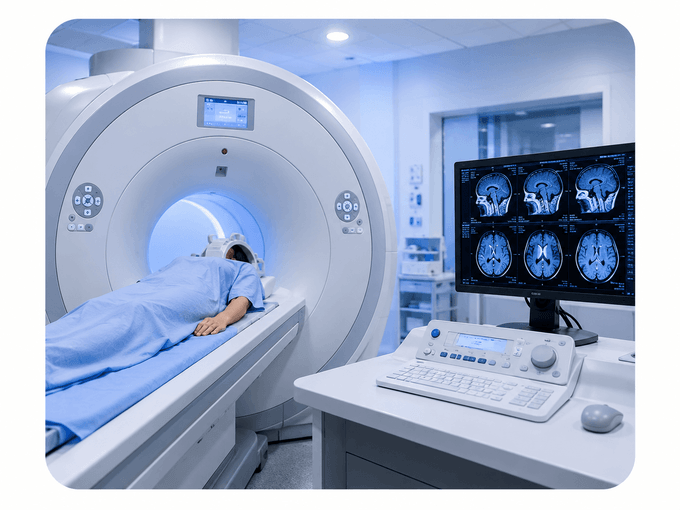
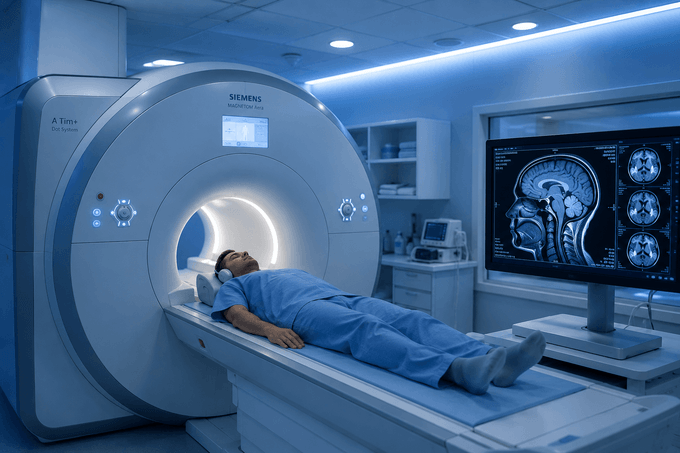
5. MRI
MRI may provide detailed images of the gallbladder and nearby structures.
6. Biopsy
A tissue sample may be examined to confirm the diagnosis.

Treatments
1. Surgery
Surgery may remove the gallbladder and surrounding tissue when the cancer can be removed completely.

2. Cholecystectomy
A cholecystectomy removes the gallbladder.
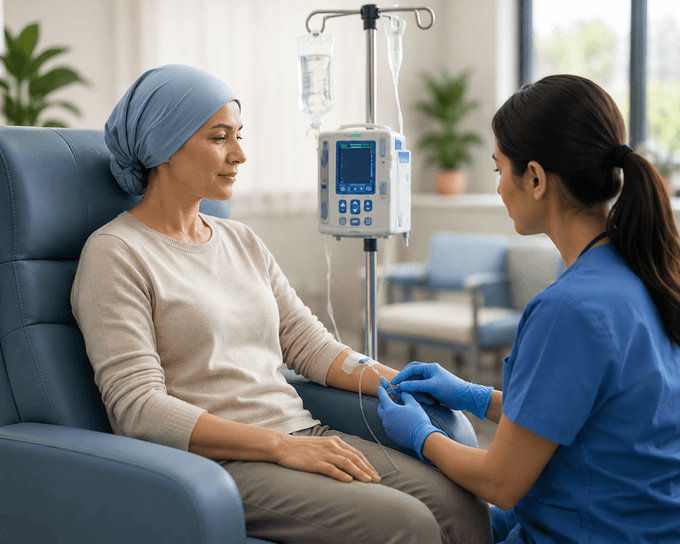
3. Chemotherapy
Chemotherapy may be used before or after surgery, or when surgery is not possible.
4. Radiation Therapy
Radiation therapy may be used to destroy cancer cells or help control symptoms.