Laryngeal Cancer
Laryngeal cancer is a type of cancer that affects the larynx, commonly known as the voice box. The larynx is a hollow structure located in the center of the neck above the trachea (windpipe) and esophagus. It enables the production of sound and allows air to travel from the throat into the trachea and onward to the lungs.
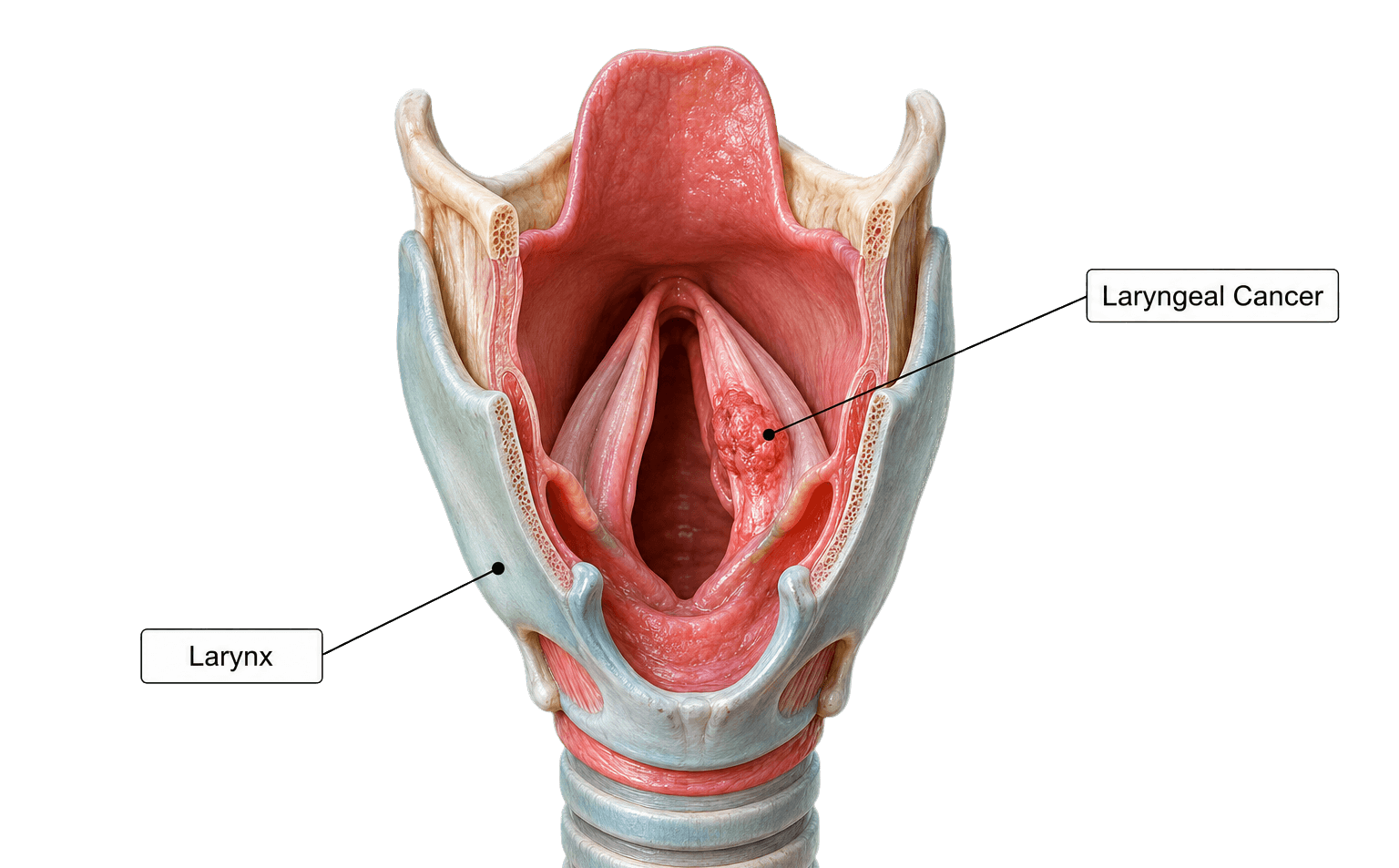
Overview
Laryngeal cancer develops when abnormal cells grow uncontrollably within the tissues of the larynx. The disease can begin in different parts of the voice box and may affect functions such as speech, breathing and swallowing. Like other cancers, it occurs when cells undergo changes that cause them to grow and multiply abnormally.
The symptoms and treatment options for laryngeal cancer often depend on the location and extent of the tumor within the larynx. Because the voice box is involved in several essential functions, early diagnosis can help preserve speech and other important abilities. Timely treatment and specialized care play an important role in managing the condition and improving outcomes.
Risk Factors
Factors We Cannot Control

Age
Laryngeal cancer happens more often in people age 55 and older.

Sex
Men are about five times more likely to develop laryngeal cancer.

History of Head and Neck Cancer
About 1 in 4 people who have had head and neck cancer will get it again.
Lifestyle & Health Factors

Tobacco Use
Smoking or using other tobacco products greatly increases the risk of laryngeal cancer.

Alcohol Use
Drinking alcohol, especially more than one drink daily, raises risk. Using alcohol and tobacco together increases risk even more.
Symptoms
1. Sore Throat or Cough
A sore throat or cough that does not improve may be a symptom.

2. Painful Swallowing
Pain or other difficulty when swallowing may occur.

3. Neck or Throat Lump
A lump in the neck or throat may be a warning sign.

4. Trouble Making Voice Sounds
Difficulty making voice sounds, also called dysphonia, may occur.

5. Ear Pain
Ear pain may occur with laryngeal cancer.

6. Coughing Blood
Coughing up blood may occur and should be checked right away.

Diagnosis
1. Physical Examination
A healthcare provider will ask about symptoms and medical history, then examine the throat and neck.

2. Imaging Scans
CT or MRI scans can show the tumor’s size and location, while chest X-ray can check whether cancer has spread to the lungs.

3. Laryngoscopy
During laryngoscopy, a provider uses a thin, lighted tube to examine the larynx.

4. PET Scan
A PET scan uses a small safe dose of radioactive substance to highlight areas with cancer cells.

5. Biopsy
A biopsy removes a small piece of abnormal tissue from the larynx so a pathologist can examine it under a microscope.

6. Protein Marker Testing
The biopsy sample may be checked for protein markers because some treatments only work on cancer cells with specific markers.

Treatments
1. Radiation Therapy
Radiation therapy uses high-energy beams to kill cancer cells while targeting the tumor and limiting damage to nearby healthy tissue.

2. Chemotherapy
Chemotherapy uses medicines to kill or slow the growth of cancer cells.

3. Immunotherapy
Immunotherapy uses the immune system to help fight cancer.

4. Targeted Therapy
Targeted therapy focuses on cancer cells with specific proteins and helps prevent them from multiplying.

5. Surgery
For early laryngeal cancer, surgery may remove the tumor while preserving the larynx. Advanced cancer may need laryngectomy.

6. Cordectomy
Cordectomy removes part or all of a vocal cord, usually through the mouth.