Nasopharyngeal Cancer
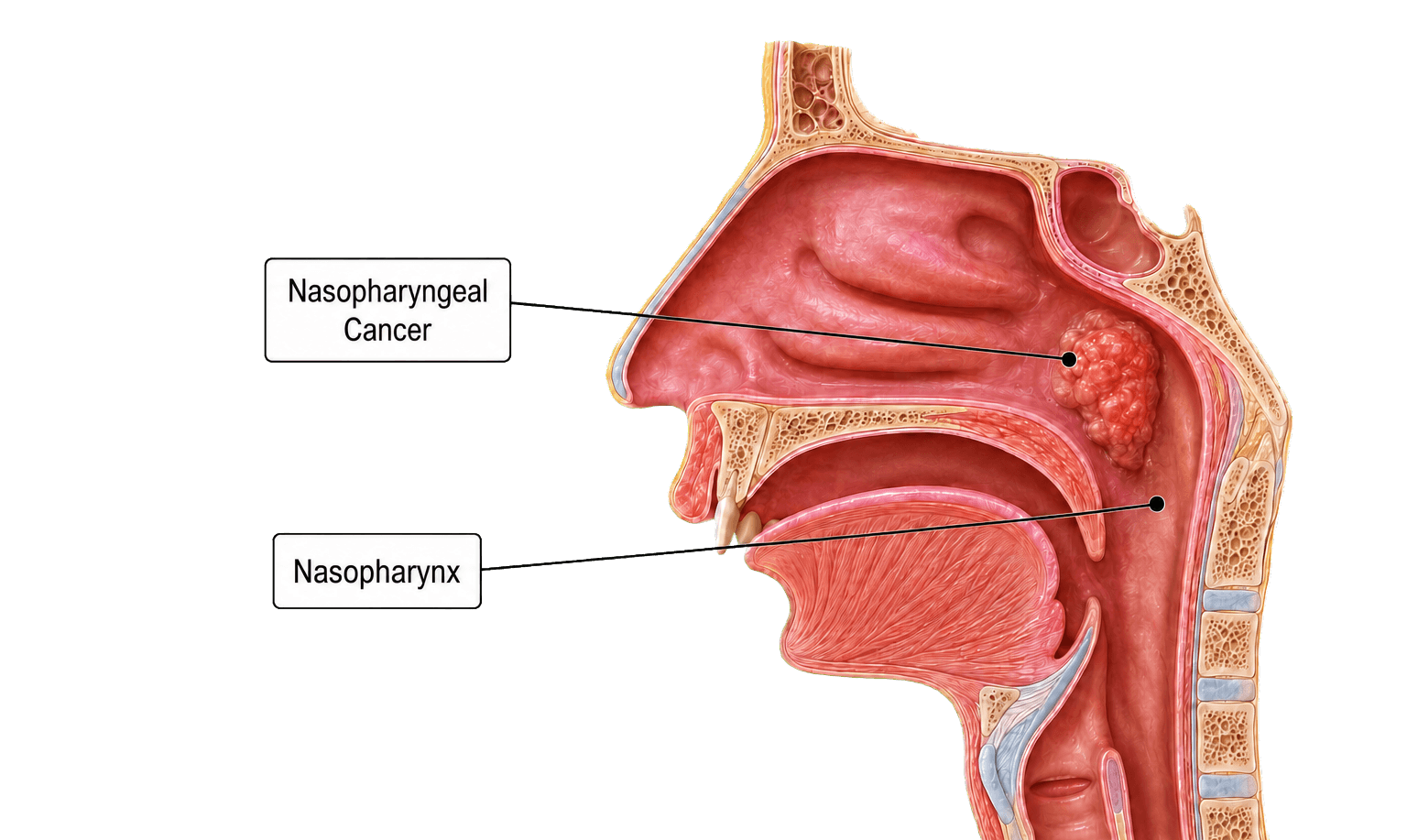
Nasopharyngeal cancer is a rare cancer that begins in the nasopharynx, the upper part of the throat that connects the nose to the respiratory system.
Overview
Nasopharyngeal cancer is a rare type of head and neck cancer that develops in the tissues of the nasopharynx, the area connecting the back of the nose to the back of the mouth. It begins when abnormal cells grow uncontrollably and form tumors that can spread to nearby lymph nodes and other parts of the body.
The stage of the cancer helps determine the most appropriate treatment approach. Detecting nasopharyngeal cancer early can improve treatment outcomes before it spreads to distant organs such as the lungs, liver or bones.
Risk Factors
Factors We Cannot Control

Family History
People with a close family member who has had nasopharyngeal cancer have a higher risk.

Male Sex
Men are about three times more likely than women to develop nasopharyngeal cancer.
Lifestyle & Health Factors

Tobacco Use
Smoking or using other tobacco products increases the risk of developing nasopharyngeal cancer.

Heavy Alcohol Consumption
Frequent and heavy alcohol use is linked with a greater chance of developing this cancer.

Salt-Cured Foods
Regularly eating large amounts of salt-cured meat or fish may increase the risk of nasopharyngeal cancer.
Dust and Smoke Exposure
Long-term exposure to high levels of dust and smoke may increase the likelihood of developing this cancer.
Symptoms
1. Painless Neck Lump
A painless lump at the back or side of the neck caused by enlarged lymph nodes is the most common symptom.

2. Hearing Problems
Hearing loss, ringing in the ears or a feeling of fullness in the ears may occur.

3. Persistent Ear Infections
Ear infections that do not improve or continue to return can be a warning sign.

4. Nasal Symptoms
A blocked nose or repeated nosebleeds may develop as the tumor grows.

5. Facial Pain or Numbness
Pain, numbness or discomfort in the face may occur if nearby nerves are affected.

6. Difficulty Breathing or Speaking
Advanced disease may cause trouble breathing, speaking or opening the mouth.

Diagnosis
1. Physical Examination
A healthcare provider examines the head, neck, nose, throat, facial muscles and lymph nodes while reviewing your medical and family history.

2. Epstein-Barr Virus Blood Test
Blood tests may measure Epstein-Barr virus levels because the infection is commonly linked to this cancer.

3. Biopsy
A tissue sample is removed from the abnormal area and examined under a microscope to confirm cancer.

4. CT or MRI Scan
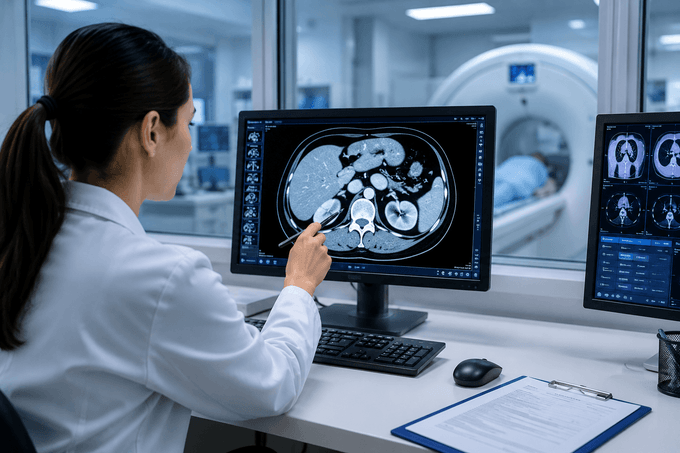
CT and MRI scans help determine the tumor's size, location and whether nearby structures are involved.
5. PET Scan
A PET scan helps identify whether cancer has spread to lymph nodes or other areas of the body.

6. Hearing Test
A hearing test may be performed to evaluate hearing changes related to the tumor.
Treatments
1. Radiation Therapy
Radiation therapy is a primary treatment that uses high-energy beams to destroy cancer cells.

2. Chemotherapy
Chemotherapy uses medicines to destroy cancer cells or slow their growth.

3. Chemoradiation
Chemotherapy and radiation therapy may be combined to improve treatment effectiveness.

4. Targeted Therapy
Targeted therapy attacks specific features of cancer cells while limiting damage to healthy tissue.

5. Surgery
Surgery may be used in selected cases, particularly to remove lymph nodes that do not respond to other treatments.
