Ocular Melanoma
Ocular melanoma is a type of eye cancer that develops on or inside the eye. The eyes are sensory organs that capture visible light and convert it into signals the brain uses to create vision, allowing you to see the world around you.

Overview
Ocular melanoma is a rare type of eye cancer that develops in melanocytes, the pigment-producing cells found within the eye. Although melanoma is more commonly associated with the skin, it can also form inside the eye, most often in the uvea, which is the eye's middle layer.
Ocular melanoma is treatable, and early detection plays an important role in improving treatment outcomes and survival. Depending on the location and extent of the tumor, treatment is planned to control the cancer while preserving as much vision and eye function as possible.
Risk Factors
Factors We Cannot Control

Light-Colored Eyes
Blue, green or gray eyes are associated with an increased risk.

Family History of Melanoma
Having a biological family member with melanoma may increase the likelihood of developing ocular melanoma.
Lifestyle & Health Factors

No Confirmed Lifestyle Risk Factors
No any specific lifestyle habits that are proven to increase the risk of ocular melanoma.
Symptoms
1. Blind Spots
Blind spots or missing areas in vision may gradually become larger.

2. Flashes of Light
Some people notice flashes or other visual disturbances.

3. Eye Pain or Pressure
Pain or an unusual feeling of pressure in or around the eye may occur.

4. Redness or Dark Spots
New or changing dark spots, freckles, redness or irritation may develop in the eye.

5. Vision Changes
Sudden or progressive changes in vision should be evaluated by an eye specialist.

Diagnosis
1. Comprehensive Eye Examination
An eye specialist examines the inside of the eye and evaluates vision for signs of melanoma.
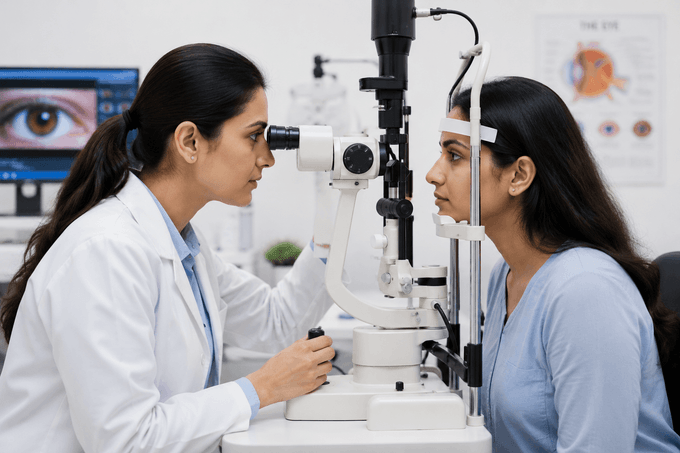
2. Slit Lamp Examination
A slit lamp allows the healthcare provider to detect abnormalities inside the eye, including early tumors.

3. Eye Imaging Tests
Tests such as ultrasound, fluorescein angiography or optical coherence tomography help evaluate the tumor.

4. CT or MRI Scan
CT or MRI scans may be performed to determine whether cancer has spread beyond the eye.

5. Biopsy
A fine-needle aspiration or biopsy may be used to confirm the diagnosis by examining tumor cells.

Treatments
1. Surgery
Surgery removes part or all of the eye when necessary to prevent the cancer from spreading.

2. Radiation Therapy
Radiation therapy destroys cancer cells and helps shrink eye tumors while preserving surrounding tissue whenever possible.
