Salivary Gland Cancer
The salivary glands produce saliva, which helps keep the mouth lubricated, supports swallowing and digestion, and protects the teeth from bacteria.
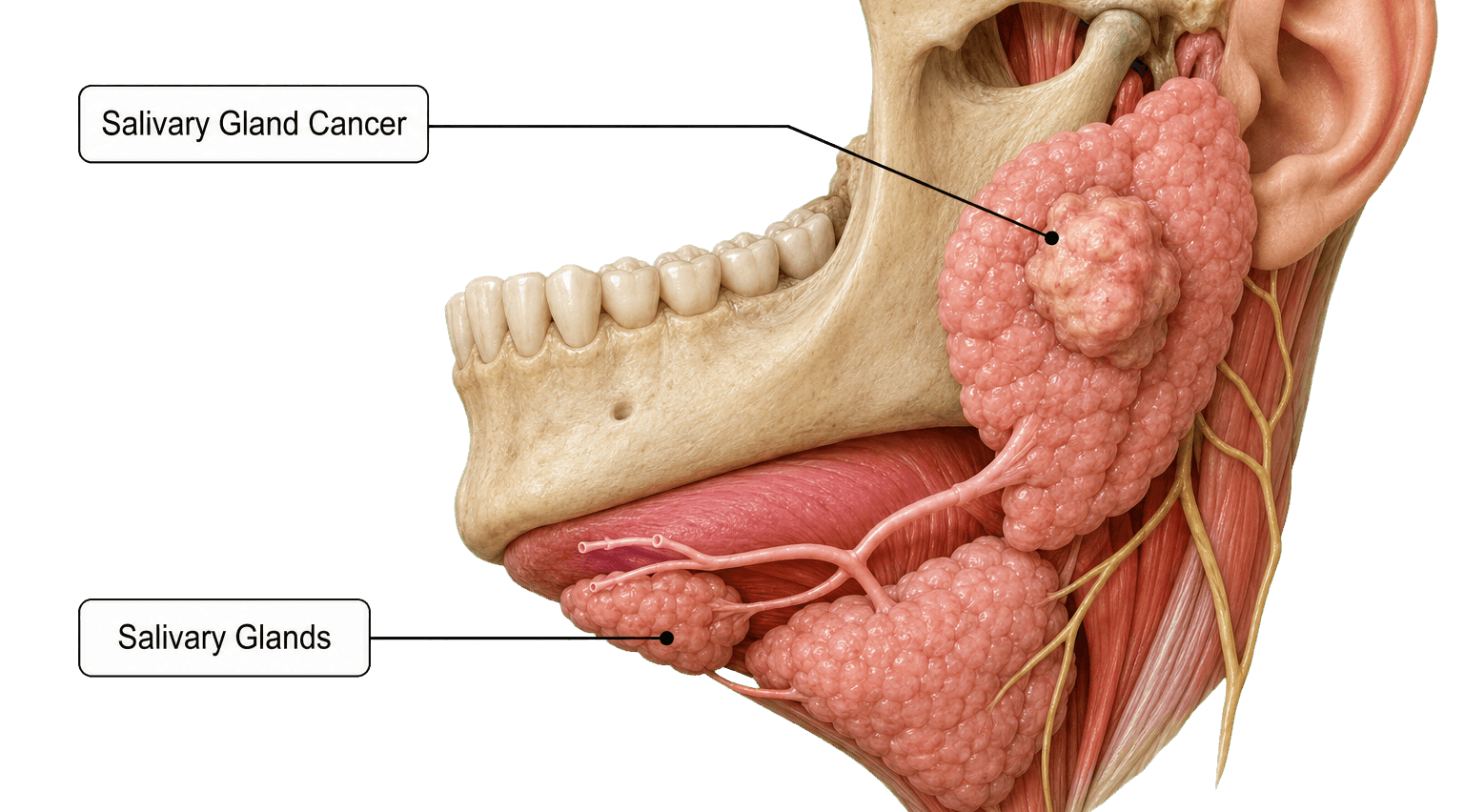
Overview
Salivary gland cancer is a rare cancer that develops in the glands responsible for producing saliva. It can occur in any of the major or minor salivary glands, although most tumors begin in the parotid glands located near the cheeks. While some salivary gland tumors are benign, malignant tumors require prompt evaluation and treatment. :contentReference[oaicite:0]{index=0}
The type of salivary gland involved and whether the cancer has spread influence treatment planning and outlook. Early diagnosis is important because cancers that remain confined to the salivary glands are generally easier to treat than those that spread to distant parts of the body. :contentReference[oaicite:1]{index=1}
Risk Factors
Factors We Cannot Control

Older Age
People aged 55 years or older are more likely to develop salivary gland cancer.

Male Sex
Men are more likely than women to develop malignant salivary gland tumors.

Previous Radiation Exposure
Radiation therapy to the head or neck increases the risk of salivary gland cancer.

Occupational Exposure
Working in industries such as plumbing, rubber manufacturing, asbestos mining or leatherwork may increase risk.
Lifestyle & Health Factors

Smoking
Smoking is associated with an increased risk of developing salivary gland cancer.

Frequent Alcohol Use
Regular heavy alcohol consumption may increase the likelihood of developing salivary gland cancer.
Symptoms
1. Painless Lump
A painless lump in the mouth, jaw, cheek or neck is the most common symptom.

2. Facial Weakness or Numbness
Weakness or numbness affecting the face, jaw or mouth may occur when nearby nerves are involved.

3. Persistent Pain
Pain in the face, jaw, mouth or neck that doesn't go away can be a warning sign.

4. Difficulty Swallowing
Growing tumors may make swallowing uncomfortable or difficult.

5. Bleeding From the Mouth
Bleeding inside the mouth can occur in some cases of salivary gland cancer.

Diagnosis
1. Physical Examination
Your healthcare provider examines the salivary glands, checks facial nerve function and reviews your symptoms.

2. CT Scan
CT imaging helps determine the size of the tumor and whether it has spread.

3. MRI
MRI provides detailed images of soft tissues and nearby nerves or muscles.

4. PET Scan
A PET scan may be used to evaluate whether the cancer has spread to lymph nodes or other organs.

5. Biopsy
A fine-needle aspiration or core needle biopsy confirms whether a salivary gland tumor is cancerous.

Treatments
1. Surgery
Surgery is the primary treatment and aims to remove the tumor, sometimes along with nearby lymph nodes.

2. Radiation Therapy
Radiation therapy is commonly used after surgery or when surgery isn't possible to destroy remaining cancer cells.

3. Chemotherapy
Chemotherapy may be recommended if the cancer has spread beyond the head and neck.

4. Targeted Therapy
Some advanced salivary gland cancers may be treated with targeted therapies that focus on specific cancer cell changes.

5. Immunotherapy
Immunotherapy may be considered for selected advanced cases as part of specialized treatment or clinical trials.
