Tongue Cancer
The tongue is a muscular organ located in the mouth that plays an important role in chewing, swallowing, speaking, and breathing. It helps move food during digestion, supports clear speech by forming different sounds, and helps keep the airway open.
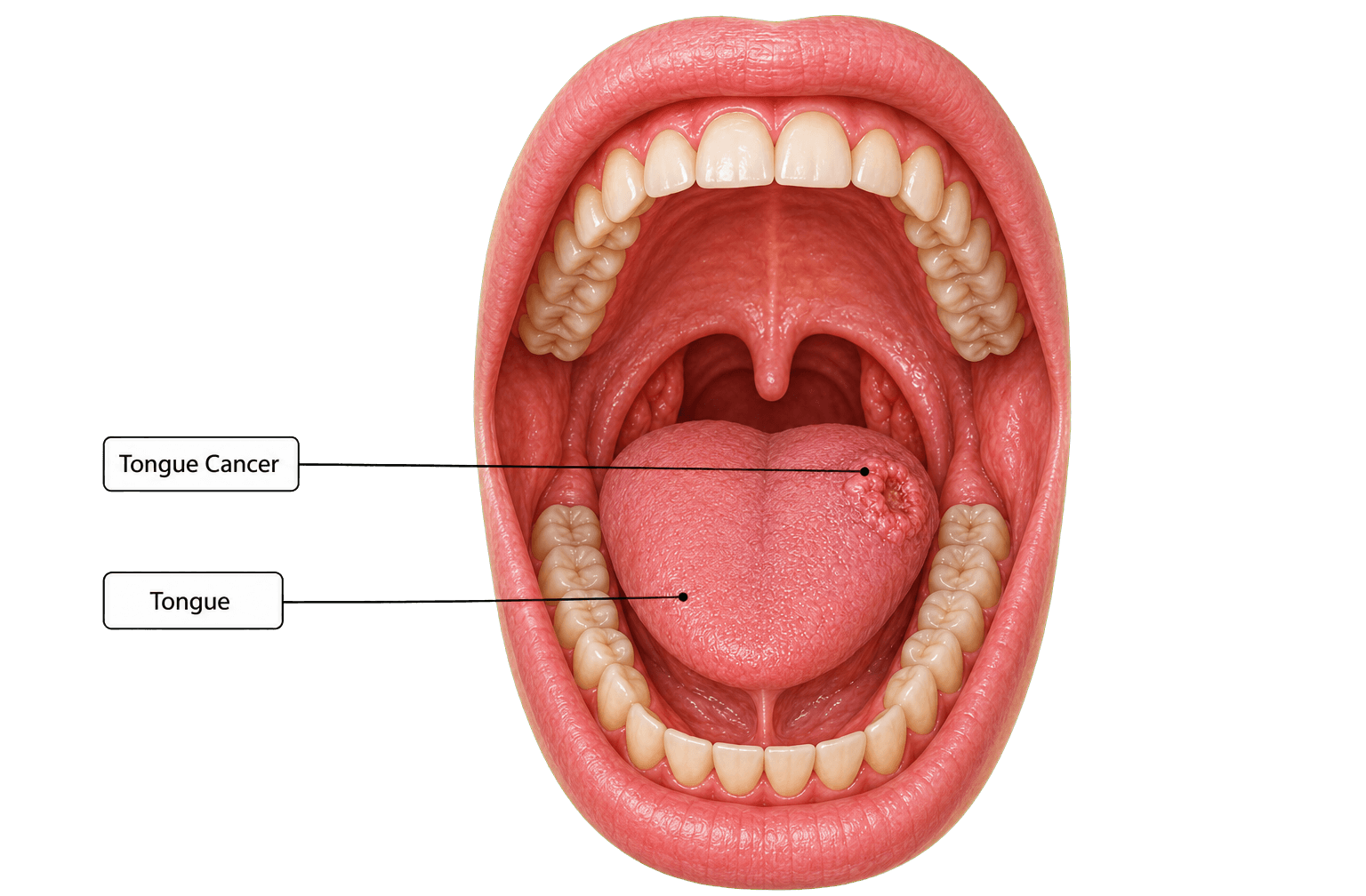
Overview
Tongue cancer develops when cells in the tongue grow uncontrollably and form a tumor. The most common type is squamous cell carcinoma, which begins in the thin, flat cells covering the surface of the tongue. Cancer can affect the front portion of the tongue (oral tongue) or the base of the tongue near the throat (base of tongue cancer). :contentReference[oaicite:0]{index=0}
Treatment depends on the tumor's size, location and whether it has spread to nearby tissues or lymph nodes. Early detection plays an important role in improving treatment outcomes and preserving essential functions such as speaking, swallowing and eating. :contentReference[oaicite:1]{index=1}
Risk Factors
Factors We Cannot Control

HPV Infection
Human papillomavirus (HPV) is a leading cause of cancers that develop at the base of the tongue.

Family History
A biological family history of oral or oropharyngeal cancers may increase the risk.

Previous Cancer
People who have had squamous cell carcinoma or other head and neck cancers have a higher risk.
Lifestyle & Health Factors

Smoking
Smoking cigarettes, cigars or pipes is one of the strongest risk factors for tongue cancer.

Heavy Alcohol Consumption
Excessive alcohol use significantly increases the risk, especially when combined with smoking.
Symptoms
1. Red or White Patches
Persistent red or white patches on the tongue may be an early sign of tongue cancer.

2. Tongue Lump or Ulcer
A lump or sore on the tongue that doesn't heal or bleeds easily should be evaluated.

3. Difficulty Swallowing
Pain or difficulty while chewing or swallowing may occur as the tumor grows.

4. Ear or Neck Pain
Pain that spreads to the ear or neck may develop as the disease progresses.

Diagnosis
1. Oral Examination
A healthcare provider examines the tongue and mouth for abnormal tissue or suspicious lesions.

2. Endoscopy
An endoscope allows the provider to examine the mouth, throat and base of the tongue in greater detail.

3. Biopsy
A tissue sample is removed and examined under a microscope to confirm the diagnosis.

4. CT, MRI or PET Scan
Imaging tests help determine the size of the tumor and whether it has spread.

Treatments
1. Surgery
Surgery removes part or all of the tumor and may include removal of nearby lymph nodes.

2. Radiation Therapy
Radiation therapy may be given before or after surgery or used as the main treatment in selected cases.

3. Chemotherapy
Chemotherapy is commonly combined with radiation therapy for advanced tongue cancer.

4. Targeted Therapy
Targeted drugs block specific proteins that help cancer cells grow and spread.

5. Immunotherapy
Immunotherapy helps the immune system recognize and attack certain advanced tongue cancers.