Tonsil Cancer
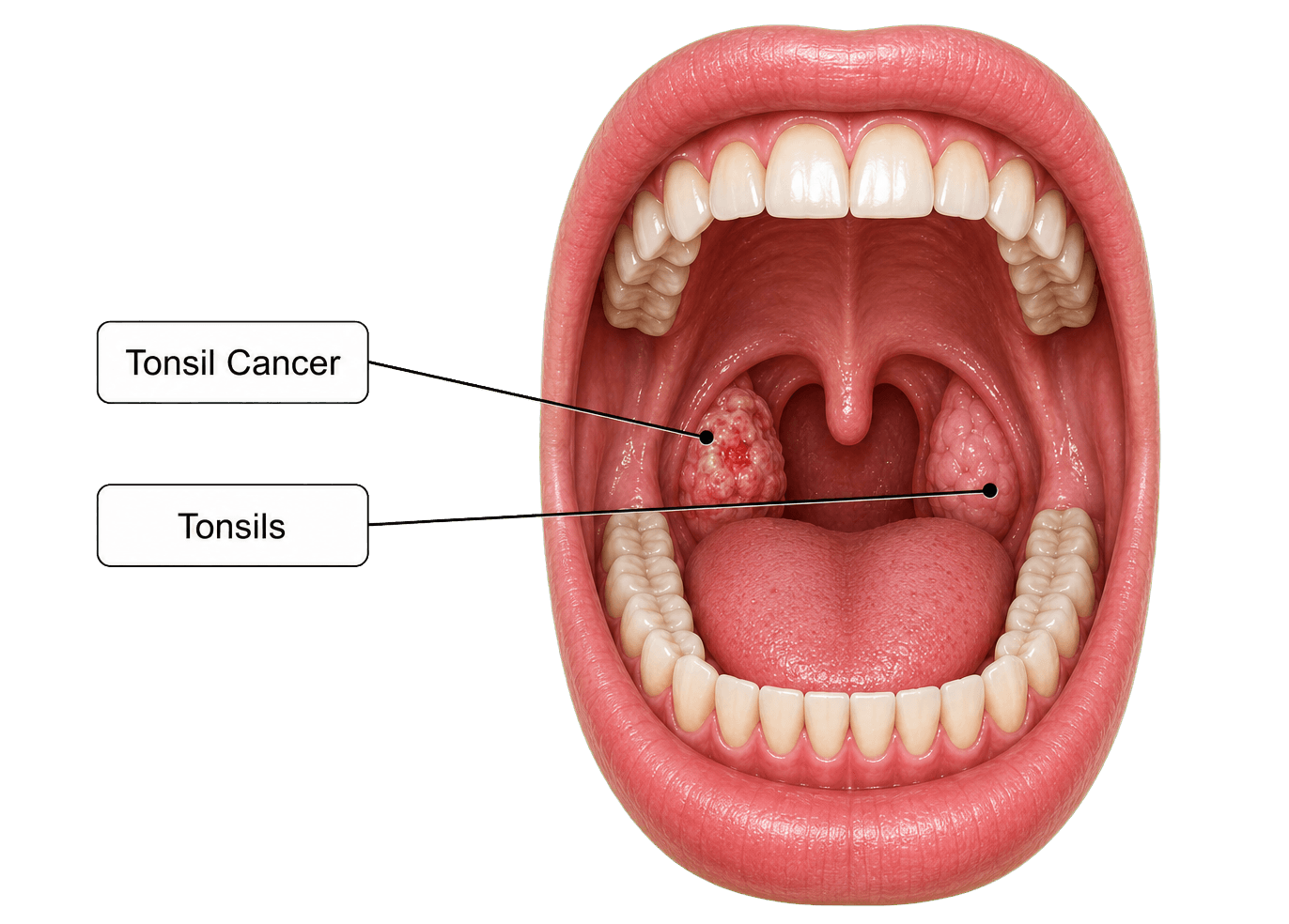
The tonsils are two small, round masses located at the back of the throat. They are part of the immune system and help protect the body by trapping and filtering germs that enter through the nose or mouth. They contain white blood cells that help fight infection.
Overview
Tonsil cancer is a type of oropharyngeal (throat) cancer that develops in the tonsils. It begins when abnormal cells grow uncontrollably, forming a malignant tumor. It is the most common type of oropharyngeal cancer.
Many cases of tonsil cancer are linked to persistent infection with human papillomavirus (HPV), while others are associated with tobacco and heavy alcohol use. Treatment is often successful when the cancer is diagnosed early and may include surgery, radiation therapy, chemotherapy or targeted treatments.
Risk Factors
Factors We Cannot Control

Persistent HPV Infection
Persistent infection with high-risk strains of human papillomavirus (HPV), especially HPV-16, is the leading risk factor for tonsil cancer.

Weakened Immune System
People with weakened immune systems, including those with HIV or organ transplants, have a higher risk.

Older Age
HPV-independent tonsil cancer is more common in adults over 55 years of age.

Male Sex
Tonsil cancer occurs more frequently in men than women.
Lifestyle & Health Factors

Tobacco Use
Smoking cigarettes, using smokeless tobacco or vaping increases the risk of tonsil cancer.

Heavy Alcohol Use
Long-term heavy alcohol consumption significantly increases the risk, especially when combined with tobacco use.
Symptoms
1. Persistent Sore Throat
A sore throat that doesn't improve over time is one of the most common symptoms.

2. Painless Neck Lump
An enlarged lymph node or painless lump in the neck may be the first noticeable sign.

3. Difficulty Swallowing
Swallowing food or liquids may become painful or difficult as the tumor grows.

4. Ear Pain
Pain in one ear without an ear infection can occur due to shared nerve pathways.

5. Blood in Saliva
Blood may appear in saliva or when coughing due to irritation or bleeding from the tumor.

Diagnosis
1. Physical Examination
A healthcare provider examines the throat, mouth and neck for abnormal areas or enlarged lymph nodes.

2. Biopsy
A biopsy removes tissue from the tonsil or lymph node to confirm the presence of cancer cells.

3. CT, MRI or PET Scan
Imaging tests determine the size of the tumor and whether it has spread.

4. HPV Testing
Tumor tissue may be tested for HPV because HPV-associated cancers often have a better prognosis.

Treatments
1. Surgery
Surgery removes the tumor and may include removal of affected lymph nodes when necessary.

2. Radiation Therapy
High-energy radiation destroys cancer cells and is commonly used for early-stage disease or after surgery.

3. Chemotherapy
Chemotherapy may be combined with radiation therapy for advanced or aggressive cancers.

4. Immunotherapy or Targeted Therapy
These treatments may be used for advanced, recurrent or metastatic tonsil cancer to help slow tumor growth.