Urethral Cancer
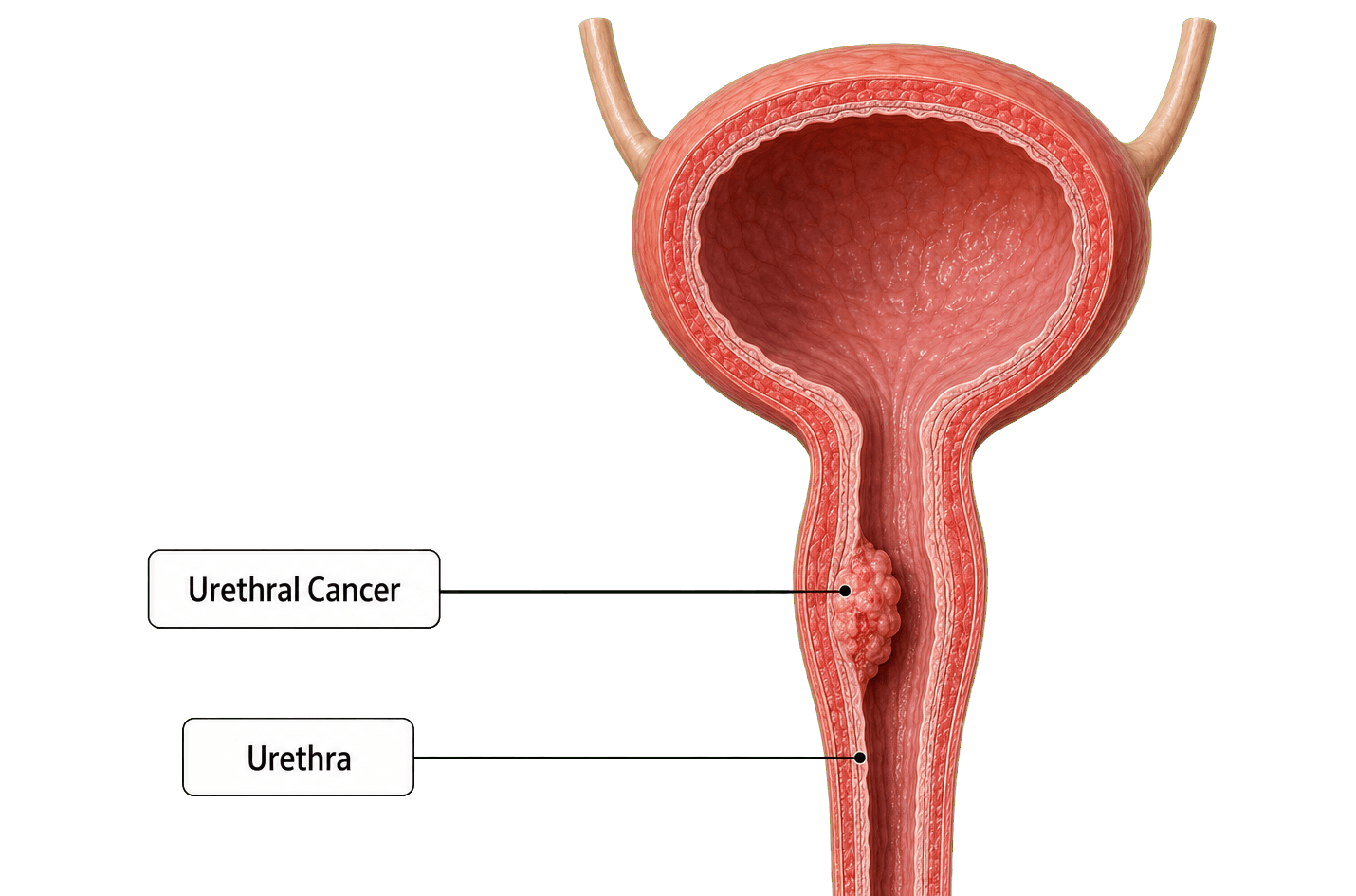
The urethra is a tube in the urinary system that carries urine from the urinary bladder to the outside of the body. It is part of the system that removes waste from the blood in the form of urine. In males, it also carries semen, while in females it only carries urine.
Overview
Urethral cancer is a rare cancer that develops when abnormal cells grow in the tissues lining the urethra. It can affect both men and women, although it is uncommon. The disease includes several types depending on the cells where the cancer begins, with transitional cell carcinoma being the most common.
The exact cause of urethral cancer isn't known, but long-term inflammation, chronic infections and certain medical conditions may increase the risk. Early diagnosis is important because the cancer can spread to nearby tissues and lymph nodes if left untreated.
Risk Factors
Factors We Cannot Control

Age Over 60
Urethral cancer is diagnosed more often in people who are 60 years or older.

Chronic Urethral Inflammation
Long-term inflammation caused by repeated urinary tract infections or sexually transmitted infections increases risk.

Human Papillomavirus (HPV)
Certain HPV infections have been linked to an increased risk of urethral cancer.

History of Bladder Cancer
People with a personal or family history of bladder cancer have a greater risk.
Lifestyle & Health Factors

Smoking
Smoking and other tobacco products significantly increase the risk of developing urethral cancer.

Long-Term Catheter Use
Long-term use of Foley catheters may contribute to chronic irritation and increase risk.
Repeated Urinary Infections
Frequent urinary tract infections can lead to chronic inflammation associated with urethral cancer.
Symptoms
1. Blood in Urine
Blood in the urine is one of the most common symptoms of urethral cancer.

2. Pain During Urination
Burning or pain while urinating may occur as the tumor grows.

3. Weak Urine Stream
The urine stream may become weak, interrupted or difficult to start.

4. Frequent Urination
Some people experience an increased urge or need to urinate more often.

5. Lump Near the Urethra
A lump or thickened area near the urethra, penis or perineum may develop.

6. Urethral Discharge
Clear, white or off-white discharge from the urethra may occur in some cases.

Diagnosis
1. Physical Examination
Your healthcare provider reviews your symptoms and performs a physical examination.

2. Urine Tests
Urinalysis and urine cytology help detect blood, abnormal cells and signs of cancer.

3. Cystoscopy
A cystoscope is inserted into the urethra to examine the urethra and bladder directly.

4. CT Scan
CT imaging helps determine the size of the tumor and whether it has spread.

5. Biopsy
A biopsy confirms the diagnosis by examining tissue samples under a microscope.

Treatments
1. Surgery
Surgery is the primary treatment and removes the tumor along with nearby affected tissue when necessary.

2. Radiation Therapy
Radiation therapy uses high-energy beams to destroy cancer cells or shrink tumors.

3. Chemotherapy
Chemotherapy uses cancer-fighting medicines to destroy cancer cells and may be combined with other treatments.

4. Reconstructive Surgery
Some patients may undergo reconstructive surgery to restore urinary function after cancer treatment.
