Wilms Tumor
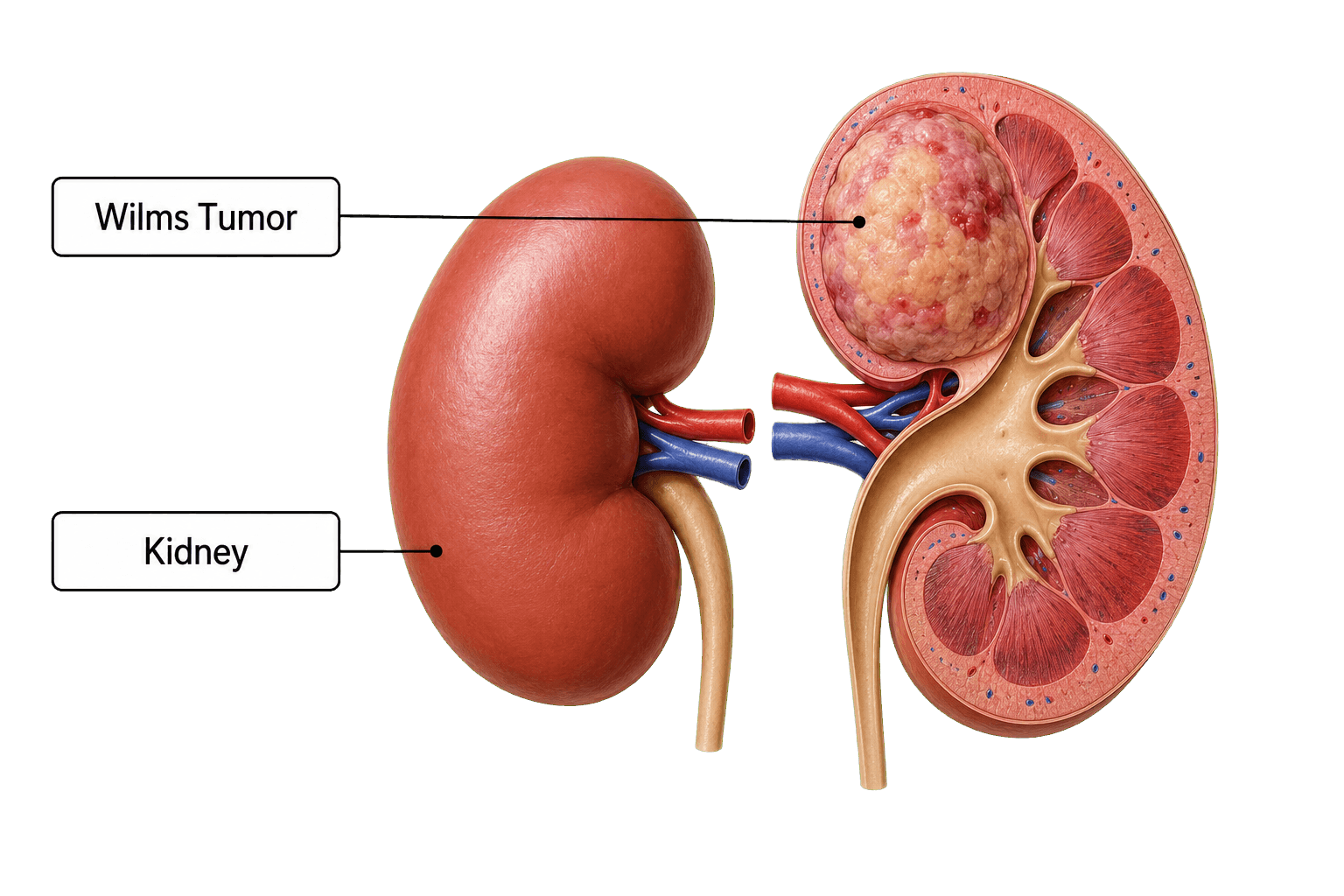
Wilms tumor is a type of cancer that mainly affects children and develops in the kidneys. It usually forms in one kidney, though in some cases it can affect both. The kidneys are two organs in the urinary system that filter blood to remove waste and produce urine.
Overview
Wilms tumor, also called nephroblastoma, is a rare kidney cancer that occurs primarily in children. It accounts for nearly 90% of kidney cancers in children and is usually diagnosed before the age of 10, most commonly between ages 3 and 5. :contentReference[oaicite:0]{index=0}
Most Wilms tumors develop in only one kidney, although some children may have tumors in both kidneys. With modern treatment, including surgery and chemotherapy, the outlook for most children with Wilms tumor is very good. :contentReference[oaicite:1]{index=1}
Risk Factors
Factors We Cannot Control

Young Age
Most children with Wilms tumor are diagnosed before age 10, especially between 3 and 5 years.

Inherited Genetic Changes
A small number of children inherit genetic mutations associated with Wilms tumor.

Certain Birth Syndromes
Some congenital syndromes and birth defects increase the likelihood of developing Wilms tumor.

Family History
Having a close family member with Wilms tumor slightly increases the risk.
Lifestyle & Health Factors

No Known Lifestyle Risk Factors
There are no proven lifestyle habits that cause Wilms tumor. Most cases develop because of genetic changes that occur early in life.
Symptoms
1. Abdominal Lump
A firm swelling or lump in the abdomen is the most common sign.

2. Abdominal Pain
Some children experience pain or discomfort in the abdomen.

3. Blood in Urine
Blood may appear in the urine due to the kidney tumor.

4. Fever
Persistent fever without another obvious cause may occur.

5. Loss of Appetite
Some children may lose their appetite or appear unusually tired.

Diagnosis
1. Physical Examination
The healthcare provider checks the abdomen for swelling or a mass.

2. Ultrasound
An abdominal ultrasound is usually the first imaging test used to identify a kidney tumor.

3. CT or MRI Scan
These scans determine the size of the tumor and whether it has spread.

4. Blood and Urine Tests
Laboratory tests evaluate kidney function and overall health.

5. Biopsy
A biopsy may be performed in selected cases to confirm the diagnosis.

Treatments
1. Surgery
Surgery removes the tumor and, in many cases, the affected kidney.

2. Chemotherapy
Chemotherapy is commonly given before or after surgery to destroy cancer cells.

3. Radiation Therapy
Radiation therapy may be recommended for advanced-stage or high-risk tumors.
