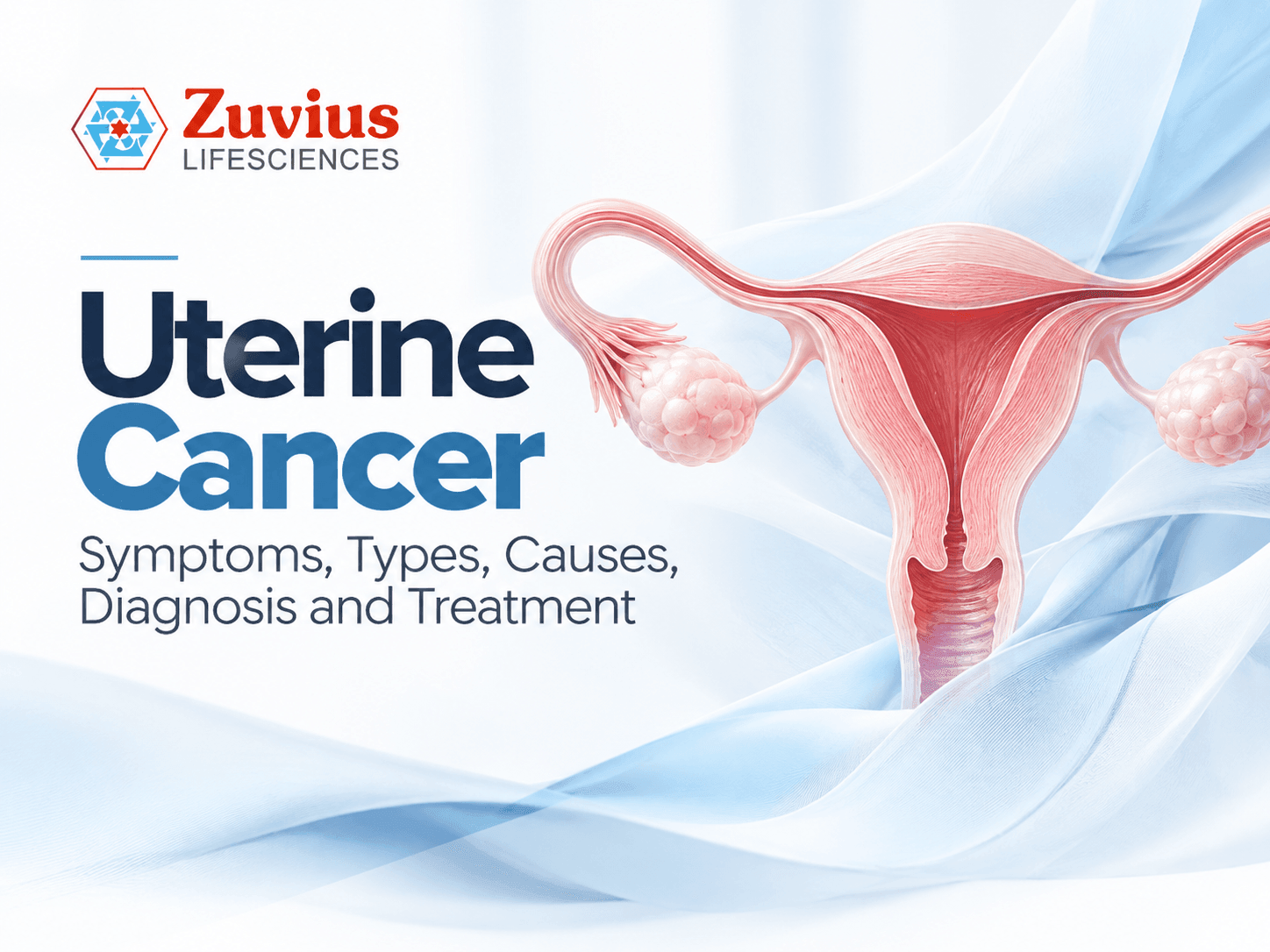
What Is Uterine Cancer?
The uterus is a hollow, pear-shaped organ in the pelvis where fetal development takes place during pregnancy. Uterine cancer occurs when abnormal cells develop in the uterus and multiply uncontrollably.
The term uterine cancer generally includes two main types:
- Endometrial cancer
- Uterine sarcoma
Although endometrial cancer is sometimes referred to as uterine cancer, the terms are not always interchangeable. The type of cancer is important because its diagnosis and treatment can differ.
Types of Uterine Cancer
1. Endometrial Cancer
Endometrial cancer begins in the endometrium, the tissue lining the inside of the uterus. It is the most common type of uterine cancer.
2. Uterine Sarcoma
Uterine sarcoma develops in the muscle or supporting tissues of the uterus. It is less common than endometrial cancer.
What Are the Symptoms of Uterine Cancer?
Uterine cancer may cause symptoms that are noticeable, particularly changes in vaginal bleeding. However, these symptoms can also occur because of conditions that are not cancerous.
Possible symptoms include:
- Vaginal bleeding after menopause.
- Bleeding or spotting between menstrual periods.
- Menstrual periods that are heavier or longer than usual.
- Pelvic or abdominal pain.
- Unusual vaginal discharge.
- A feeling of pressure, fullness or swelling in the abdomen or pelvis.
- Changes in urination or bowel movements, particularly in some cases of uterine sarcoma.
Symptoms may vary depending on the type of uterine cancer. Some people may have few or no noticeable symptoms, particularly when the cancer is small.
Is Bleeding After Menopause a Warning Sign?
Yes. Vaginal bleeding after menopause should be medically evaluated, even when the bleeding is light or happens only once.
Abnormal bleeding does not automatically mean that a person has uterine cancer. However, consulting a healthcare professional can help identify the underlying cause and determine whether further testing is needed.
What Causes Uterine Cancer?
The exact cause of endometrial cancer is not always known. It begins when cells in the lining of the uterus undergo changes in their DNA.
DNA contains instructions that control how cells function, grow and die. Certain changes can cause cells to multiply abnormally and continue living when healthy cells would normally die. These abnormal cells may form a tumor, invade nearby tissue and, in some cases, spread to other parts of the body.
The development of uterine cancer involves complex biological processes. Having a risk factor does not mean that someone will definitely develop the disease.
Risk Factors for Uterine Cancer
Certain factors may increase the likelihood of developing endometrial cancer. These can include:
- Increasing age, particularly after menopause.
- Obesity.
- Hormonal factors involving estrogen.
- Certain inherited genetic conditions.
- A personal or family history of specific cancers.
- Certain hormonal treatments or medical exposures.
How Is Uterine Cancer Diagnosed?
If uterine cancer is suspected, a healthcare professional may recommend several examinations and tests. The investigations selected depend on the symptoms, medical history and findings from the initial assessment.
1. Pelvic Examination
A pelvic examination allows a healthcare professional to examine the reproductive organs and look for abnormalities that may require further investigation.
2. Transvaginal Ultrasound
A transvaginal ultrasound uses a device called a transducer to create images of the pelvic organs. It can help the healthcare team assess the uterus, including the thickness and appearance of the endometrium.
Ultrasound may help identify findings that require additional testing, but it cannot independently confirm every case of uterine cancer.
3. Hysteroscopy
Hysteroscopy involves using a thin, lighted instrument called a hysteroscope to examine the inside of the uterus.
This procedure can help a healthcare professional examine the endometrium and investigate possible abnormalities.
4. Endometrial Biopsy
An endometrial biopsy involves removing a small sample of tissue from the uterine lining. The sample is then examined in a laboratory to determine whether cancerous changes are present.
The findings from a biopsy can provide important information about the cancer and help the healthcare team develop a treatment plan.
5. Imaging Tests and Staging
Additional imaging tests, such as MRI or CT scans, may be recommended to understand the location and extent of the cancer.
After diagnosis, the healthcare team determines the stage of the disease. Endometrial cancer stages are numbered from 1 to 4. Staging helps the medical team understand how far the cancer has developed and plan appropriate treatment.
How Is Uterine Cancer Treated?
Treatment for uterine cancer depends on several factors, including:
- The type of cancer.
- The stage and grade of the disease.
- The characteristics of the cancer cells.
- The individual's general health.
- The treatment options considered appropriate by the medical team.
Different patients may receive different treatment plans. A cancer specialist evaluates the diagnosis and recommends an approach based on the individual's circumstances.
1. Surgery
Surgery is commonly used to treat endometrial cancer. A frequent procedure is a hysterectomy, which involves removing the uterus.
Depending on the diagnosis and treatment plan, the fallopian tubes, ovaries or nearby lymph nodes may also be removed or examined. The surgical approach depends on the type and extent of the cancer.
For uterine sarcoma, surgery may be the main treatment when the cancer is limited to the uterus and can be completely removed. The procedure depends on the type of sarcoma and the patient's circumstances.
2. Radiation Therapy
Radiation therapy uses high-energy radiation to damage or destroy cancer cells. It may be recommended in certain situations, depending on the type, stage and characteristics of the cancer.
Radiation treatment can be delivered from outside the body or, in some cases, through internal radiation known as brachytherapy.
3. Chemotherapy
Chemotherapy uses medicines that act against cancer cells. It may be considered after surgery, before surgery in selected situations, or for advanced or recurrent disease.
The use of chemotherapy depends on the diagnosis and the treatment plan recommended by the cancer specialist. Treatment approaches may differ between endometrial cancer and uterine sarcoma.
4. Hormone Therapy
Hormone therapy uses medicines that lower hormone levels or affect how hormones act in the body.
It may be an option for certain cases of advanced endometrial cancer. In some uterine sarcomas, hormone therapy may be used depending on the cancer subtype and its hormone receptors.
5. Targeted Therapy and Immunotherapy
Targeted therapy uses medicines designed to act on specific features of cancer cells. Immunotherapy helps the immune system recognize or attack cancer cells.
These approaches may be considered for selected patients, depending on the cancer type, stage and test results. They are not suitable for every person with uterine cancer.
Can Uterine Cancer Be Prevented?
Although not all cases of uterine cancer can be prevented, certain lifestyle choices may help reduce the risk. Maintaining a healthy weight is one of the measures associated with a lower risk of endometrial cancer.
Individuals should consult a healthcare professional to understand their personal risk factors and discuss appropriate risk-reduction strategies.
Having one or more risk factors does not necessarily mean that a person will develop uterine cancer.
Frequently Asked Questions
Is uterine cancer the same as endometrial cancer?
Not exactly. Uterine cancer is a general term that includes endometrial cancer and uterine sarcoma. Endometrial cancer begins in the lining of the uterus and is more common than uterine sarcoma.
What is a common warning sign of uterine cancer?
Abnormal vaginal bleeding is a common symptom, including bleeding between periods or after menopause. However, abnormal bleeding can have causeS other than cancer and should be evaluated by a healthcare professional.
Can uterine cancer be diagnosed through an ultrasound alone?
An ultrasound can help healthcare professionals examine the uterus and identify abnormalities. However, a tissue biopsy may be needed to confirm endometrial cancer. The tests required depend on the individual case.
Which specialist treats uterine cancer?
A gynecologic oncologist specializes in cancers affecting the female reproductive system. Other specialists, including medical oncologists and radiation oncologists, may also participate in treatment depending on the patient's needs.
Is uterine cancer treatment the same for every patient?
No. Treatment depends on factors such as the type, stage and characteristics of the cancer, along with the individual's general health and circumstances. A cancer specialist recommends a treatment plan based on the diagnosis.
Conclusion
Uterine cancer includes different types of cancer, with endometrial cancer being the most common. Unusual vaginal bleeding, particularly bleeding after menopause, should not be ignored and requires medical evaluation.
Diagnosis may involve a pelvic examination, imaging tests, hysteroscopy and a tissue biopsy. Treatment depends on the type and stage of cancer and may include surgery, radiation therapy, chemotherapy, hormone therapy, targeted therapy or immunotherapy.
If you experience concerning symptoms or have questions about uterine cancer, consult a qualified cancer specialist for appropriate evaluation and medical guidance.
Medical Disclaimer: This article is intended for general educational and informational purposes only. It is not a substitute for professional medical advice, diagnosis, or treatment. Please consult a qualified cancer specialist for personalized medical guidance.